

UnitedHealth Group (UNH) beat Wall Street‘s numbers on July 16, 2026, but its chief financial officer spent the earnings call making sure nobody mistook that result for a solved cost problem.
The company beat earnings estimates by roughly 30%, and management raised full-year guidance well past analysts’ expectations.
Yet the UnitedHealth executive closest to the numbers refused to call it a turning point in costs.
CFO Wayne DeVeydt’s comments to reporters conveyed something different from the earnings release, and they are worth paying attention to.
What UnitedHealth reported in the second quarter of 2026
According to Investing.com, UnitedHealth posted adjusted earnings of $6.38 a share on revenue of $112.0 billion. That beat analyst expectations of $4.90 a share on $110.85 billion.
Net income reached $5.48 billion, up from $3.41 billion a year earlier.
Operating earnings rose55% to $8.0 billion, and the company reported $11.1 billion in cash flows from operations, or 1.9 times net income, Yahoo Finance reported.
More Healthcare Coverage:
- Mark Cuban warns AI could make US healthcare even worse
- Medicaid’s 5-year rule catches families off guard
- GLP-1 weight-loss drug popularity reaches new heights with Americans
UnitedHealth’s management then raised full-year adjusted earnings guidance to a range of $19.50 to $20.00 a share.
That’s up from a prior view of more than $18.25 and maintains revenue guidance above $439 billion.
Although analysts had expected a rise, they didn’t expect one of that size, Healthcare Dive reported.
Why the medical care ratio did most of the work
The medical care ratio drove the quarter. It shows how much of every premium dollar goes to paying claims.
The number fell to86.7% from 89.4% a year earlier, and a lower ratio means the insurer keeps more of each premium dollar.
For context, the second quarter’s 86.7% ratio looks great next to last year’s 89.4%. But it’s worse than the first quarter’s83.9%.
That means costs are improving year over year, not quarter over quarter.
Part of that improvement came from $860 million in favorable reserve development, plus a milder flu season.
Executives credited these, along with benefit changes and network adjustments, in remarks reported by UnitedHealthcare.
Reserve releases and a mild flu season are real money. But they’re one-time boosts, not proof that care is getting cheaper to provide.
What CFO Wayne DeVeydt said cuts against the beat
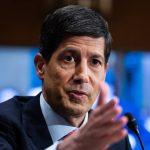
CFO Wayne DeVeydt didn’t sugarcoat his words. Medical costs stayed “elevated over historical levels,” he said.
DeVeydt told CNBC that the results reflect efforts to push down an already high number, not a sign that costs are actually coming under control.
Related: Jim Cramer turns bullish on health care stock after years of doubt
He described the recovery as a “multi-year journey,” even as he said the cultural turnaround was translating into strong earnings, Traders Union reported.
Read plainly, he is saying the company got better at managing expenses. The costs themselves didn’t get cheaper.
That distinction matters for 2027 forecasts. Pricing discipline can only go so far. Cost trends don’t have that limit.
The membership number that explains the strategy
Here’s where the trade-off shows up.
UnitedHealthcare served 48.5 million members this quarter, down about 525,000 from the prior quarter.
DeVeydt said higher premiums and smaller benefits are pushing people out of ACA exchange plans and Medicare Advantage.
He expects the company to lose roughly 500,000 exchange members and 1.1 million Medicare Advantage members in 2026.
Higher prices are making up for the lost members, so revenue still holds steady. However, DeVeydt admitted that’s not a healthy trend for the system long term.
The loop works like this:
- Medical costs run above historical levels
- UnitedHealth raises premiums and trims benefits to protect margin
- Coverage gets less affordable, and members leave
- Revenue stays flat because price replaces volume
Margin went up, and Membership went down at the same time.
Where commercial costs are still moving wrong
Medicare was the bright spot, as UnitedHealthcare CEO Tim Noel said the company is not yet seeing costs slow down in its commercial business.
As a result, the growth cost there is now running slightly above the 11% pace it reported earlier, according to Healthcare Finance News.
Dan Kueter, who runs the commercial unit, blamed part of that on a billing dispute process tied to the No Surprises Act.
He said it is adding about half a percentage point to costs this year and now accounts for at least one full point of the total commercial cost increase.
“Simply put, we’re not yielding the full margin expansion for which we planned in 2026,” Kueter said.
That is a plain admission of a problem, tucked inside a quarter that the market read as a clean win.
How UNH stock has performed against the market
The stock closed at $423.38 on July 17, up about 26% for the year and nearly 6% over the past month.
That puts its market value near $384 billion, with shares trading at about 32 times earnings.
The 52-week range runs from $234.60 to $461.62. That’s how sharp the swing has been.
UNH gained 5.6% on July 16 after the report, even as the Nasdaq and S&P 500 fell and semiconductors slid.
Quick comparison of where UNH sits:
|
Measure |
UNH |
|
Year to date |
+25.86% |
|
Past month |
+5.97% |
|
Dividend yield |
2.19% |
|
P/E ratio |
31.98 |
UNH still trades below its 52-week high, so the recovery is real but incomplete.
What still has to go right for the guidance to hold
Three things have to go right in 2026.
- Medicare costs have to stay under budget. Noel said Medicare costs are still running high by historical standards. However, they’re coming in below the 10% increase UnitedHealth planned for when it built its 2026 benefits. If that changes, margins could shrink fast.
- The commercial unit has to stop deteriorating. Kueter already said the planned margin expansion is not landing.
- Reserve development cannot be the crutch. The $860 million release helped this quarter and may not repeat.
DeVeydt said he expects Optum Health revenue growth to fully return in 2028, which is a useful reminder of the timeline UNH’s management itself is working with.
What this means if you own UNH or are watching it
If you already own the stock, the case got stronger. But pay attention to why.
The margin gains came from higher prices, membership cuts, and reserve releases. Not from care actually getting cheaper.
Those levers only work for so long. DeVeydt knows that, and he didn’t pretend otherwise.
If you’re thinking about buying in, know this: the stock is already up more than 25% this year. Much of the good news is priced in.
Watch two things next quarter. Does the medical care ratio hold up without another reserve release? Does commercial cost growth finally level off?
If you get your coverage through UnitedHealthcare, the impact is clear: The same cost discipline that lifted the company’s profits shows up for you as a higher premium or a thinner plan at renewal.
About 1.6 million people are expected to leave UnitedHealth’s plans this year for that reason.
That’s the trade DeVeydt described. He didn’t try to dress it up.
Related: Panic grips Ionis Pharmaceuticals investors amid bad news spree