



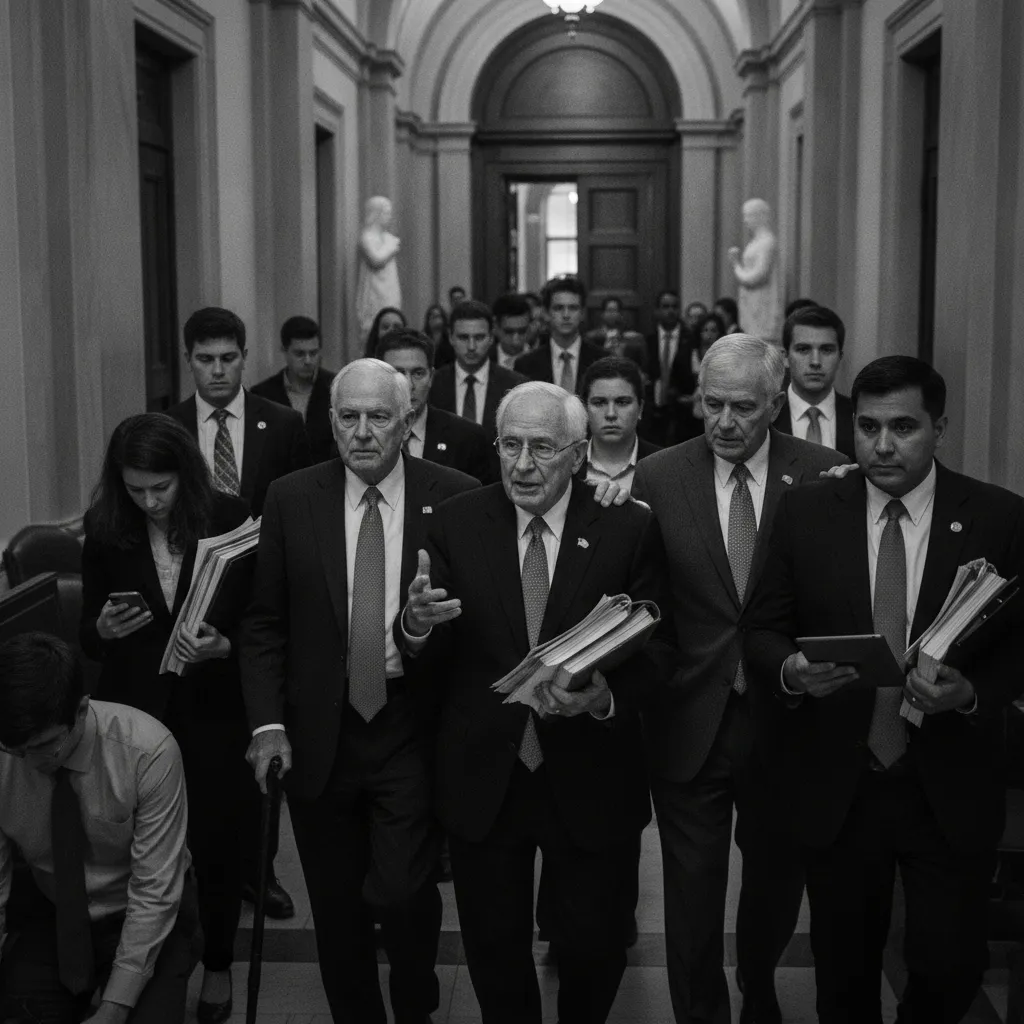

American politics is increasingly resembling a closed circle of elders, creating a governing class that bears little resemblance to the general public. From Representative Hal Rogers, who has held his Kentucky seat since the era of Ronald Reagan, to senators like Chuck Grassley, who entered office before Alaska and Hawaii were even states, the United States is grappling with a persistent gerontocracy. While the median age of a US citizen sits around 39, the average ages in the House and Senate have climbed steadily since the 1980s, leaving many to wonder why the halls of power remain occupied by figures deep into their eighties and nineties.
For aspiring young leaders like twenty seven year old Republican Riley Owen, breaking into this system feels less like a fair fight and more like an uphill battle against financial gravity. The primary barrier is often simple math: money talks, and donors overwhelmingly favor incumbents. While seasoned politicians can leverage decades of connections to raise millions, newcomers struggle to secure even a fraction of those funds. This creates a cycle where experienced lawmakers stay in office longer because they are better funded, which in turn makes it nearly impossible for younger generations to gain a foothold despite having modern expertise in areas like technology and climate change.
This disconnect extends beyond the candidates to the ballot box itself. There is a growing divide between those who hold power and those who participate in elections, as voter turnout among Gen Z and Millennials continues to lag behind older demographics. With fewer young people voting and high barriers to entry for new candidates, the incentive for parties to diversify their age brackets remains low. As concerns grow over the cognitive health and agility of aging leaders, the debate over mandatory age limits or health screenings intensifies, highlighting a systemic failure to innovate within the American political structure.