







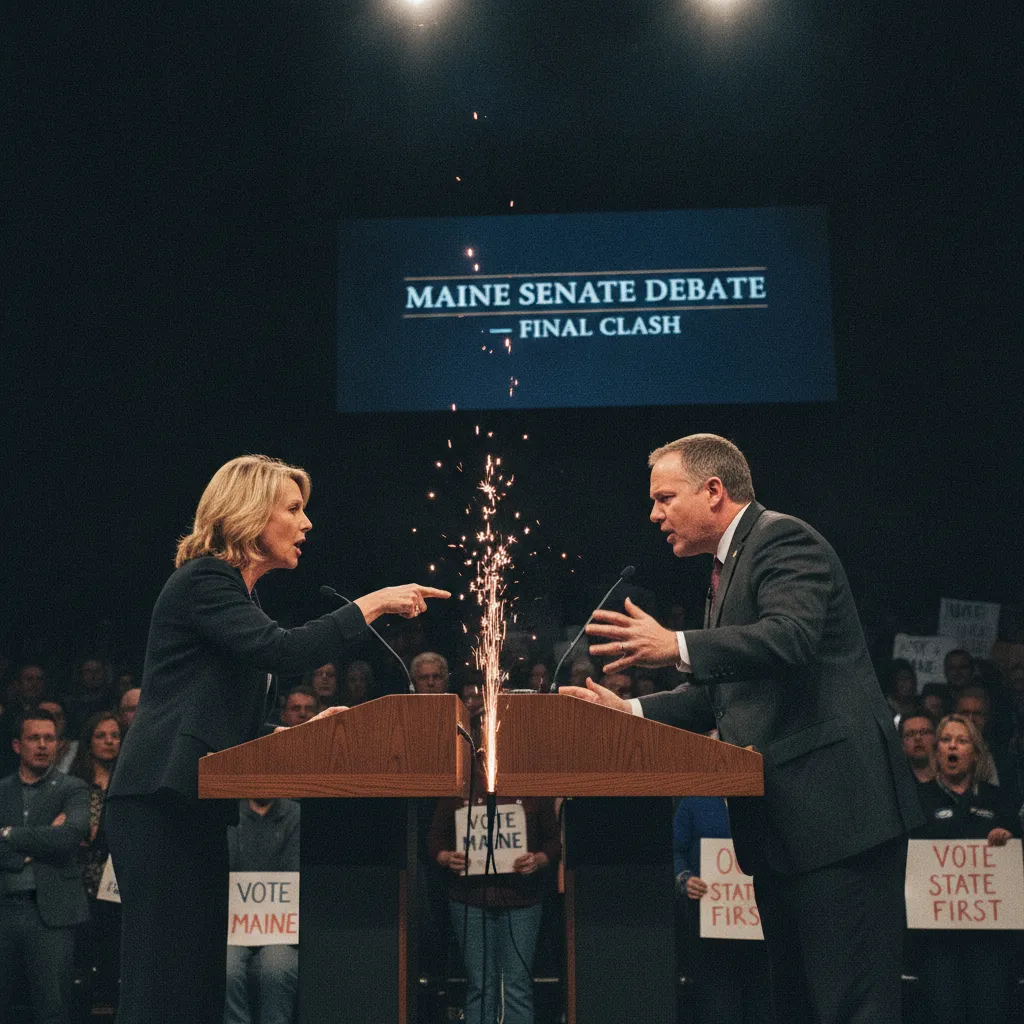

The tension finally boiled over during the last scheduled face-to-face encounter between Senator Susan Collins and challenger Troy Jackson, marking a fiery conclusion to a race with stakes reaching well beyond the borders of Maine. Over the course of an hour, the two candidates traded sharp jabs and questioned each other’s loyalties, portraying one another as puppets for distant political interests. While the evening was defined by hostility, it also featured rare moments of alignment, particularly regarding their mutual disdain for the massive influx of undisclosed dark money currently flooding the state’s airwaves to influence voters.
The ghost of Donald Trump remained a central theme throughout the night. Jackson leaned heavily into his strategy of painting the thirty year veteran as too compliant with the former president, citing a statistic that suggests Collins votes with Trump ninety six percent of the time. He warned that American democracy remains at risk because Republicans refuse to check Trump’s power. Collins countered by dismissing those figures as cherry picked and misleading, arguing instead that her record proves she is one of the most bipartisan members of the Senate while warning that Jackson would simply be an automatic rubber stamp for Democratic leadership.
Things turned unexpectedly personal when an audience member interrupted Collins to shout about environmental concerns surrounding data centers. When Collins quipped that the heckler must be one of Jackson’s supporters, Jackson fired back with a blunt tell her to shut up, claiming he didn’t even know who the young man was. Though the exchange felt more flippant than malicious—with both candidates sharing a momentary snarky smile afterward—it provided immediate ammunition for super PACs supporting Collins to frame Jackson as aggressive in their subsequent campaign emails.
Beyond the theatrics, the debate touched on several policy divides where common ground proved elusive. On gun control, Collins expressed openness to raising the purchase age for assault weapons and limiting magazine capacities, whereas Jackson focused on banning those sales entirely without seizing existing firearms from owners. They clashed further over whether to expand the Supreme Court to balance its current conservative tilt. As they stepped off the stage, it was clear that despite any fleeting agreements on campaign finance reform, these two visions for Maine remain fundamentally irreconcilable heading into November.