






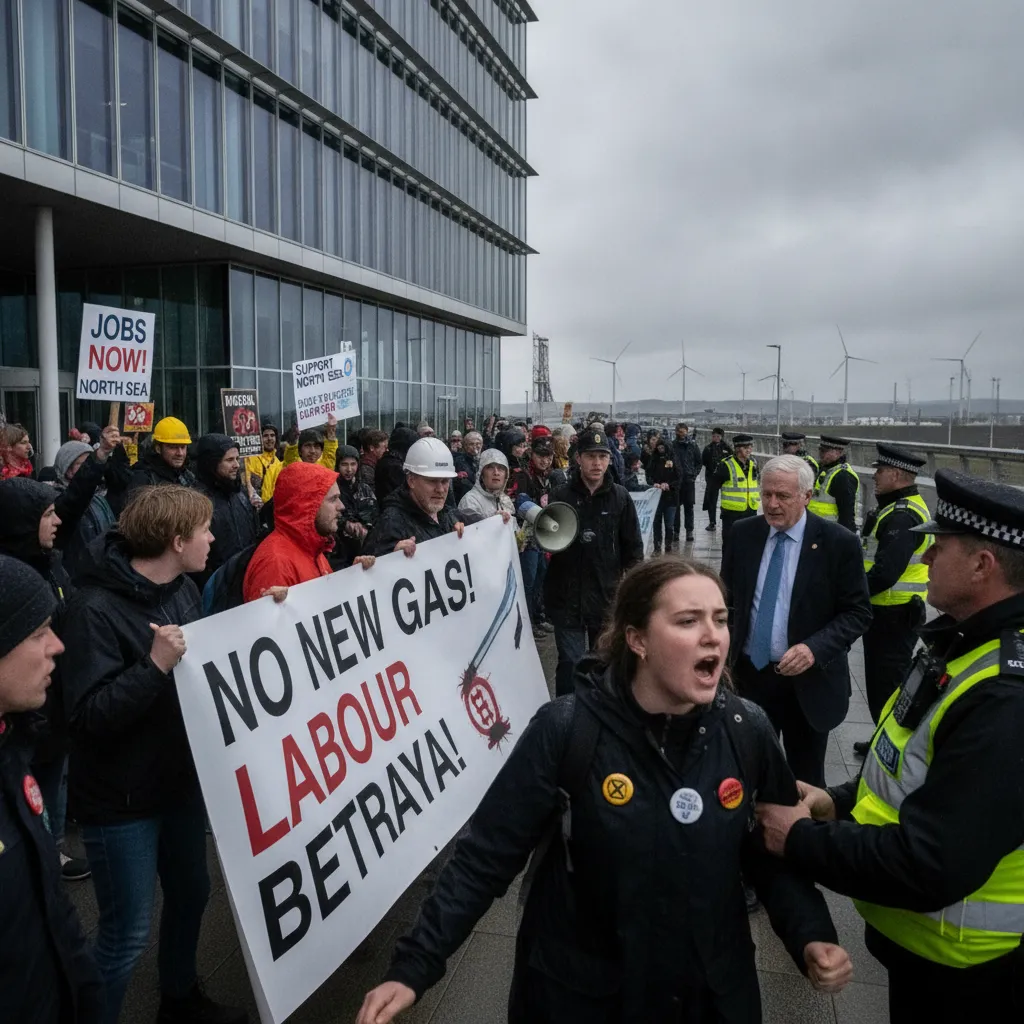

The British government has sparked a heated political row after giving the green light to the Jackdaw gasfield east of Aberdeen. While the decision follows months of uncertainty, it has immediately drawn the ire of environmentalists and political opponents who claim the move contradicts previous pledges made during the general election campaign. Although Labour vowed not to issue new licenses for North Sea drilling, officials have categorized Jackdaw as an existing project rather than a fresh venture, allowing it to proceed under a policy of pragmatism.
Green Party leader Carla Denyer and spokesperson Zack Polanski have wasted no time in condemning the approval, labeling the move as climate vandalism. In a scathing critique, Polanski argued that the decision represents a total betrayal of future generations and strips Labour of any remaining credibility in the global fight against climate change. He pointed out that according to industry assessments, the project would create only a handful of jobs and fail to significantly lower energy bills for struggling households, describing the outcome as a victory for corporate interests over public wellbeing.
Defending the choice, figures like Andy Burnham have championed the decision as a necessary balance between immediate economic stability and long term goals. Supporters argue that maximizing domestic reserves is essential for protecting thousands of jobs and ensuring millions of homes remain warm throughout the winter. They maintain that while Britain remains fully committed to achieving net zero by 2050 through renewables, oil and gas will inevitably play a supporting role in the national energy mix for several decades.
Despite some internal anxiety among certain wings of the party, most Labour MPs have remained quiet or supportive as they prepare for upcoming parliamentary statements on the matter. However, analysts suggest this is only the beginning of a larger struggle for the administration. All eyes now turn toward the pending decision on the Rosebank oilfield, which carries far higher carbon emissions and is expected to provoke an even more intense battle between industrial necessity and ecological survival.