


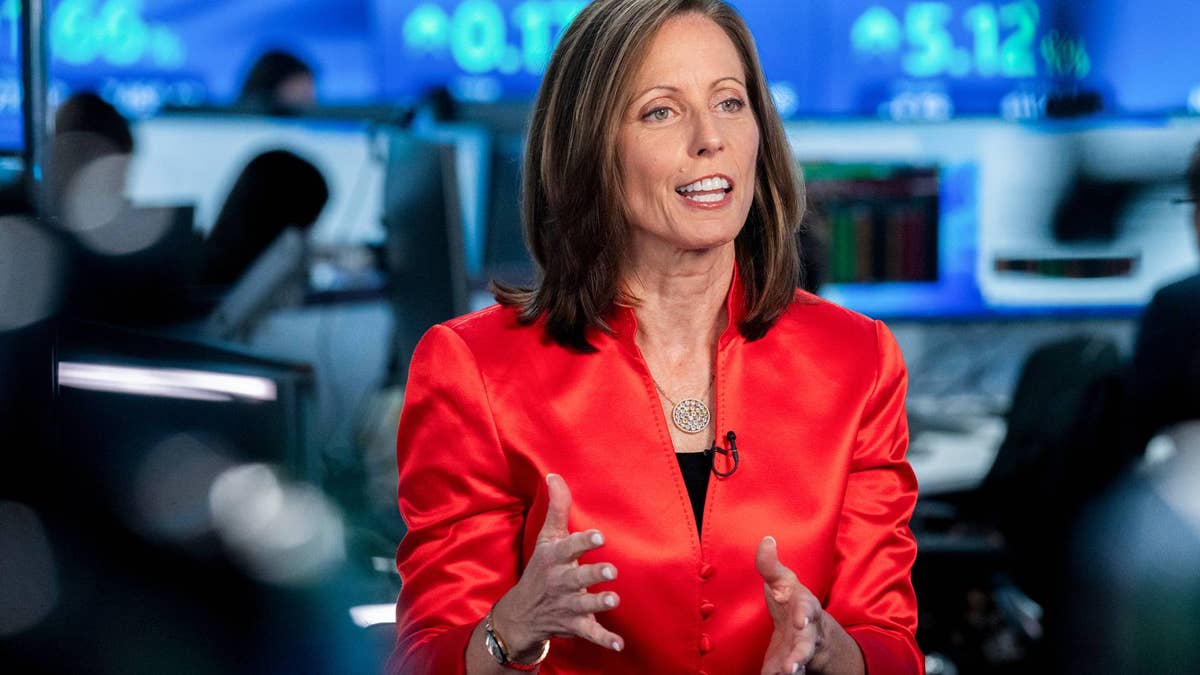

Adena Friedman, chair and CEO of Nasdaq, which lists Apple, Microsoft, and other top companies, took the stage at a major industry conference and made a bold declaration about the future of markets.
Her message to a room full of Wall Street’s most powerful players was direct. The stock market infrastructure most investors rely on today is about to undergo its most significant transformation.
The centerpiece of that transformation is tokenization, a technology that could eventually let your brokerage account operate around the clock and settle trades in seconds rather than over a full business day.
Nasdaq unveiled a blockchain-based framework for trading stocks
Friedman delivered her remarks at the FIA Global Cleared Markets Conference in Boca Raton, Fla., where she described tokenization as the natural next step for securities markets, as reported by Nasdaq’s newsroom.
Tokenization, in simple terms, means representing a share of stock as a digital token on a blockchain rather than as an entry in a traditional electronic ledger. The token carries the same ownership rights, dividend entitlements, and voting privileges as a conventional share, but it can move more quickly and efficiently between buyers and sellers.
The SEC approved Nasdaq’s proposal to begin trading tokenized securities on March 18, 2026, making it the first major U.S. exchange to receive that regulatory green light, CoinDesk reported. Under the approved framework, eligible securities include stocks in the Russell 1000 Index and exchange-traded funds tracking major indexes, such as the S&P 500 and Nasdaq-100.
Tokenized and traditional shares will trade on the same order book, carry the same ticker symbol, and share the same CUSIP number, as confirmed by the SEC’s approval order. That means an investor buying a tokenized version of a stock gets the exact same legal and economic rights as someone holding the traditional version.
How tokenized stocks could lower costs and speed up settlement
The shift matters for ordinary investors because the current behind-the-scenes plumbing of stock ownership is expensive and slow. When you vote on a shareholder proposal, collect a dividend, or wait for a trade to settle, dozens of manual handoffs and data reconciliations happen across intermediaries you never see.
Corporate actions processing alone carries an estimated structural cost exceeding $58 billion industrywide. This move is driven by fragmented systems and duplicative recordkeeping, Nasdaq Global Chief Legal, Risk and Regulatory Officer John Zecca noted in a recent Q&A published by the exchange.
More Wall Street
- JPMorgan resets S&P 500 price target for the rest of 2026
- Vanguard challenges the S&P 500 as a one-stop strategy
- Goldman Sachs resets Broadcom stock forecast
Tokenization has the potential to streamline many of those workflows by creating a more direct and automated connection between companies and their shareholders. Trades currently settle on a T+1 basis, meaning your broker delivers shares one full business day after you click “buy,” according to the FCA.
However, under a tokenized system, settlement could eventually occur in near real time, freeing up capital otherwise locked during that waiting period.
Nasdaq is collaborating with the Depository Trust and Clearing Corporation (DTCC) to build the technology needed for tokenized equity settlement. The DTCC has expressed an interest in completing a first tokenized trade before the end of 2026, Friedman said on Nasdaq’s first-quarter earnings call on April 23, MarketBeat noted.
Nasdaq also pushes toward 23-hour-a-day stock trading
Tokenization is one piece of a broader strategy Friedman calls the “Always-On” market initiative. The SEC approved Nasdaq’s separate proposal for 23/5 trading early in the second quarter of 2026, and the exchange is targeting a December 6, 2026, launch date, Friedman confirmed on the earnings call.
The extended schedule would let investors trade equities for 23 hours each weekday, up from the current window that runs from 4 a.m. to 8 p.m. EST. Roughly 2% of total trading volume currently occurs outside those standard hours, a figure the industry is looking to grow, Friedman noted.
Related: Cathie Wood sells $75M of surging semiconductor stock
Nasdaq-100 futures already trade around the clock five days a week, and offering the same kind of access for individual stocks is a logical progression.
The combination of longer trading hours and tokenized settlement could eventually give you around-the-clock access to markets with near-instant finality, something crypto traders already have but traditional stock investors do not.
Wall Street analysts see tokenization as a historic transformation
Friedman is not the only major voice signaling that this shift is significant. Jaret Seiberg, Jan Nevruzi, and other analysts at TD Securities wrote in a recent report that they believe tokenization of equity and debt securities will accelerate throughout 2026.
They called it a trend in the coming months rather than a distant future event. The firm’s research team said the investment debate centers on how instant settlement and continuous trading will reshape market structure.
“If we’re serious about building an efficient and accessible financial system, championing tokenization alone won’t suffice. We must solve digital verification, too,” said Blackrock CEO Larry Fink.
Wall Street broker Bernstein went further, calling 2026 the likely start of a tokenization “supercycle” in a January report led by analyst Gautam Chhugani, CoinDesk noted. The tokenized asset market nearly quadrupled through 2025 to close to $20 billion, and some analysts project it could exceed $400 billion by the end of this year.
What Nasdaq’s tokenization push means for investors’ brokerage accounts
Nasdaq’s broader vision ties tokenization directly to its financial momentum. The company reported $1.4 billion in net revenue for the first quarter of 2026, a 13% increase year over year, with operating income rising 17% and diluted earnings per share climbing 21%, Friedman said on the April 23 earnings call.
She described the quarter as one of the strongest starts to a year in the company’s history. The SEC’s March 18 approval of tokenized trading on Nasdaq covers Russell 1000 stocks and ETFs tracking the S&P 500 and Nasdaq-100, with tokenized shares carrying the same CUSIP, ticker, and legal rights as their traditional counterparts, as confirmed by the agency’s order.
Nasdaq’s 23/5 trading launch is set for Dec. 6, 2026, and the full equity token program is expected to be operational in 2027, the Nasdaq newsroom confirmed. Whether the infrastructure delivers the efficiency gains its proponents envision will depend on execution and adoption across brokers, clearinghouses, and market participants.
Friedman told the Boca audience that Nasdaq is working in lockstep with the DTCC and the broader industry to bring tokenized settlement online in an organized way. The timeline is set, the regulatory approvals are in place, and the first trades could arrive before year’s end.
Related: Warren Buffett has stark message for investors on stock market