



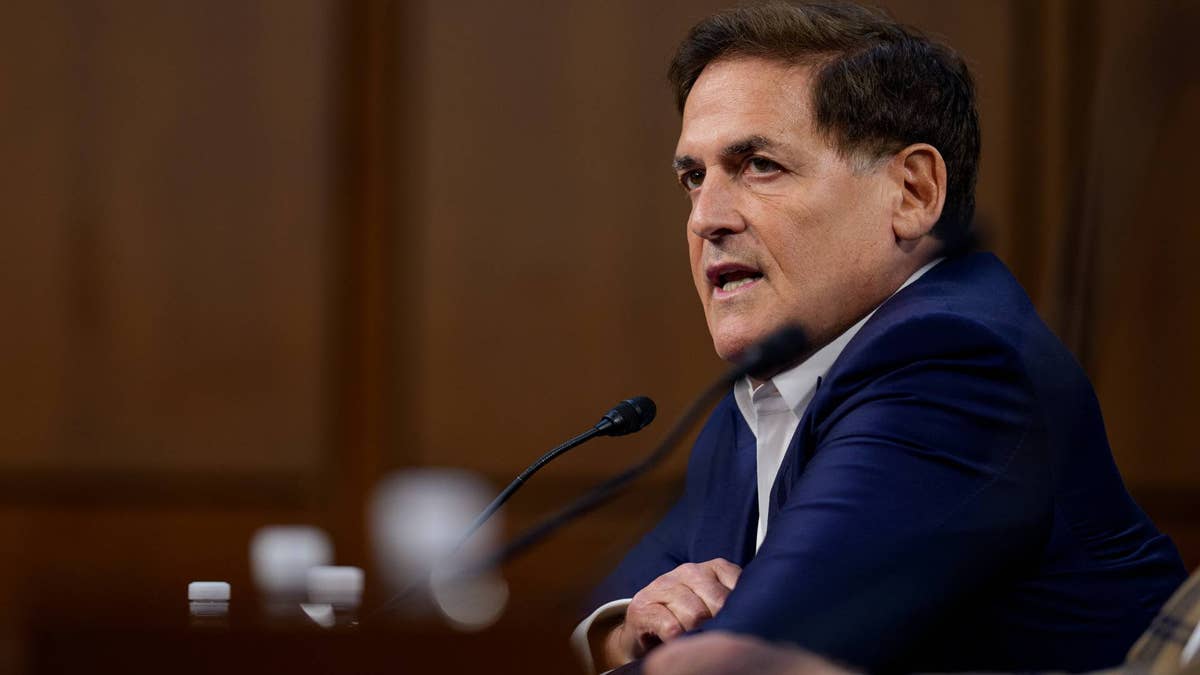



Mark Cuban believes the difference between staying wealthy and losing it comes down to what investors refuse to buy, not what they chase.
Cuban has watched that pattern repeat for decades across portfolios belonging to first-time retail investors and professional athletes alike.
The billionaire, whose net worth Forbes most recently estimated at $6 billion on its 2025 Forbes 400 list, credits his staying power to the opportunities he refused.
A “Shark Tank” blog post identifies six types of investments Cuban believes can devastate even wealthy people, ranging from unprotected businesses to funds that charge excessive fees.
His framework centers on identifying the structural weaknesses that make promising investments dangerous over time.
Cuban warns against these 6 investments
Based on Mark Cuban’s experience, the six categories below share one structural feature. Each looks promising from a distance, but conceals risks that become obvious only after capital is committed.
1. Businesses that can be easily replicated
The most fundamental warning Cuban delivers concerns businesses that lack any barrier to prevent competitors from entering the same market.
On Shannon Sharpe’s “Club Shay Shay” podcast, Cuban was blunt when advising people who come into windfall wealth, including athletes, about where they should never place their money.
More Personal Finance:
- Fidelity delivers sobering reality check on your money
- Living trusts: what they do and who needs one
- Fidelity sounds alarm on 401(k)s, IRAs
“Don’t invest in the restaurant, don’t invest in the clothing label, don’t invest in the liquor company… or music,” Cuban said on the podcast.
“That is the death!” His reasoning centers on what investors call a competitive moat, or the structural advantage that prevents rivals from replicating a company’s core model.
Restaurants, fashion labels, and music ventures attract excitement but operate in industries where new competitors can launch with minimal friction, Cuban argued on the podcast.
Beyond ease of entry, Cuban emphasizes how quickly attention shifts in these industries.
Even successful brands can lose relevance when trends change, or when new entrants capture consumer interest with similar offerings at lower cost or higher visibility.
Without structural protections like intellectual property rights, early gains are difficult to sustain.
2. Businesses requiring massive upfront capital
Cuban is wary of companies that need enormous amounts of money before they can prove their business model works. While every venture requires investment, businesses with exceptionally high capital demands leave little room for mistakes.
The larger the financial commitment, the greater the pressure to execute flawlessly.
Cuban’s decision to pass on Doorbot, which later evolved into Ring and was sold to Amazon for roughly $1 billion in 2018, illustrates this philosophy.
In a LinkedIn post cited by CNBC, Cuban wrote that he would pass on Doorbot again, citing “a fundamental aversion to companies that require raising hundreds of millions of dollars to do less in revenues.”
3. Businesses burdened by excessive debt
Debt can accelerate growth, but Cuban believes it also introduces significant constraints. Throughout his career, he has approached borrowing cautiously because debt changes how businesses operate and make decisions.
Once repayment obligations mount, capital that could have funded expansion, innovation, or new opportunities must instead service lenders.
Companies carrying heavy debt loads often lose the flexibility needed to respond to changing market conditions or unexpected challenges. Cuban views adaptability as one of a business’s greatest strengths, and excessive leverage can undermine that advantage.
4. Investments that charge high fees
Not every poor investment appears dangerous at first glance. Cuban has frequently warned against investment products whose persistent fees gradually erode long-term returns, even when performance appears strong.
High-cost mutual funds, hedge funds, and actively managed portfolios often market themselves on expertise and the promise of superior performance.
However, Cuban argues that recurring management costs accumulate over time and can significantly reduce long-term wealth.
What looks like a small annual percentage can become a substantial drag on returns over decades. This belief explains his preference for low-cost index funds, which may be less exciting but allow investors to keep a greater share of their gains.
5. Investments you cannot clearly explain
Cuban has also argued that investors should never invest in assets they do not fully understand. Complexity can create the illusion of sophistication, but it often conceals risks that become apparent only when markets turn volatile.
Former Fidelity Magellan Fund Manager Peter Lynch offered similar advice in a 1997 lecture on the stock market.
Understanding the business behind the stock is the most important principle of investing in the stock market. This is why Buffett only invests into what he understands and what falls in his circle of competence.
Whether evaluating a business, stock, or alternative investment, Cuban believes investors should be able to explain how it generates value, what drives its performance, and where the major risks lie.
If those fundamentals remain unclear, Cuban argues the investment is one to walk away from. Cuban has said understanding is non-negotiable for him, calling it the safeguard that keeps investors from making costly mistakes when markets move against them.
6. High-risk investments without defined limits
Risk itself is not something Cuban avoids. Instead, he focuses on whether that risk is measurable and manageable.
Investments that offer significant upside while exposing investors to unlimited or poorly understood losses are among the opportunities he approaches with the greatest caution.
Without clear boundaries, even a single bad outcome can overwhelm years of gains. As the “Shark Tank” blog post explains, Cuban believes successful investing requires knowing not only how much can be earned, but also how much can be lost.
Cuban has consistently described setting limits, mapping downside exposure, and protecting capital as the pillars supporting his efforts to build and preserve wealth.
Cuban’s 6 warnings form a practical investing checklist
The thread connecting all six of Cuban’s warning categories is a shared structural pattern: Each involves risk that is invisible at first glance or easy to dismiss.
Cuban’s framework reframes investing as a discipline of avoidance, rather than a pursuit of maximum return on every dollar of available capital.
Cuban has presented these categories as the filter he applies before committing capital, framing investing as a discipline of avoidance rather than a search for the next big return.
Related: Mark Cuban wishes he invested in this company earlier