







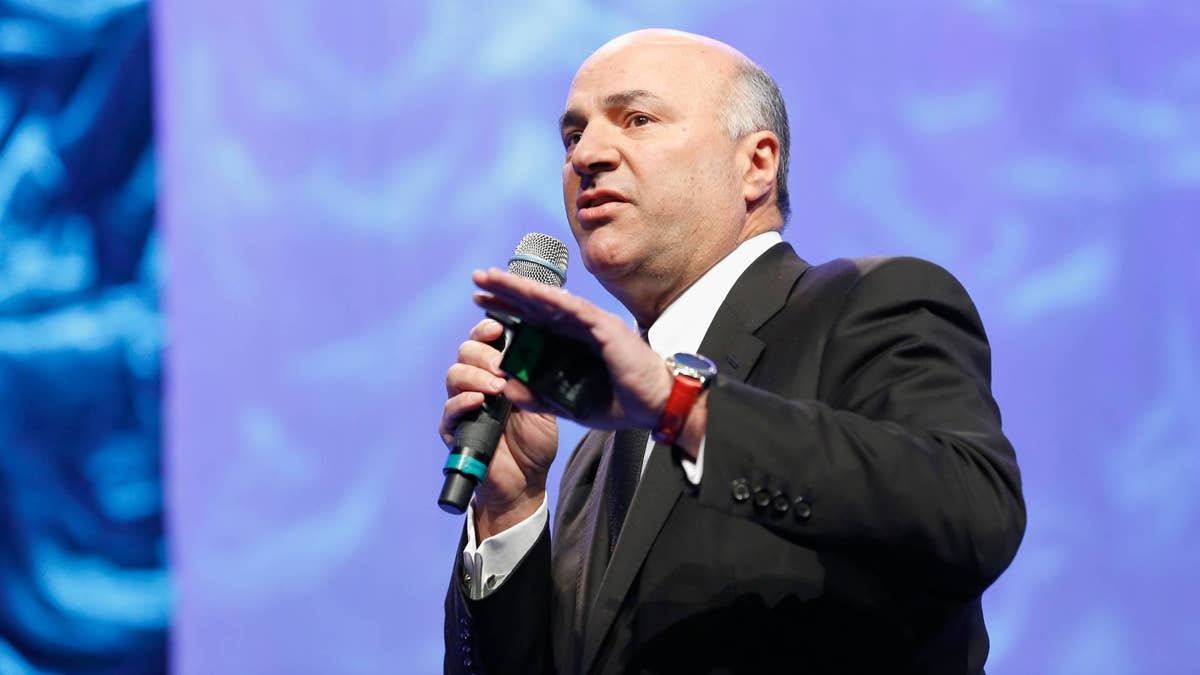

Kevin O’Leary has spent decades telling entrepreneurs on national television precisely what their businesses are worth. Now he is sharing something he rarely details publicly: the exact way he allocates his own money across asset classes, and why he believes most investors overcomplicate their approach to building wealth.
In a recent appearance on The Iced Coffee Hour podcast, the Shark Tank star laid out a three-bucket portfolio structure: 60% in equities, 20% in fixed income, and 20% in alternatives including gold and cryptocurrency, FinanceBuzz reported.
What stands out about his formula is its accessibility. In a market where social media hypes complex options strategies and meme-driven momentum trades, O’Leary is betting on a diversified structure that any investor with a brokerage account could build from scratch.
O’Leary keeps 60% of his portfolio in stocks spread across the globe
The largest slice of O’Leary’s allocation goes to equities, but he is not concentrating those positions in U.S. stocks alone. His equity holdings are diversified across multiple countries and sectors, allowing him to capture growth in economies moving on different cycles than the American market, FinanceBuzz reported.
O’Leary has also been vocal about dividend-paying companies, a focus he traces back to lessons from his late mother, Georgette. In a separate appearance on The Diary of a CEO podcast in June 2025, O’Leary told host Steven Bartlett that she followed a rigid system of investing a fixed percentage of her income into two asset classes: large-cap dividend-paying stocks and telco bonds, according to Benzinga.
He shared that she never put more than 5% into any single name and never exceeding 20% in any one sector, according to Benzinga. She maintained those rules for 55 years, and O’Leary said the philosophy still guides his family trust today.
His 20% bond allocation serves as a buffer when stocks stumble
O’Leary’s fixed-income position generates a predictable income stream that can offset equity market swings, offering what stocks cannot during the most volatile stretches, FinanceBuzz reported. For investors nearing retirement or already drawing portfolio income, bonds allow cash flow without forcing stock sales during downturns.
That 20% position takes on added significance given where interest rates stand. The yield on 10-year Treasurys has hovered near 4.5%, a level that Fidelity’s director of global macro research, Jurrien Timmer, described as historically significant for market stress, according to the firm’s April 2026 market outlook.
More Dividend stocks:
- Costco quietly bumps its quarterly dividend by 13%
- Early SCHD ETF investors now earn a 12.5% dividend yield on cost
- S&P 500 index dividend yield hits nearly 50-year low
Selling equities in a falling market locks in permanent losses, while drawing from a bond allocation preserves the equity portfolio’s ability to recover over time. At yields near 4.5%, bonds are no longer just defensive holdings but meaningful contributors to total return, reshaping how portfolios generate income in today’s uncertain environment.
This shift increases the appeal of fixed income as a stabilizing force, particularly when equity valuations face pressure, and investors look for consistency in cash flow generation. By maintaining a dedicated bond allocation, portfolios gain flexibility, allowing withdrawals to come from steadier assets while giving equities time to recover from short-term volatility swings.
O’Leary’s 20% alternatives bet includes gold and crypto with discipline
The final fifth of his portfolio encompasses gold, cryptocurrency, and collectibles, assets that tend to behave differently from stocks and bonds. That characteristic makes them useful when traditional asset classes are moving in the same direction, FinanceBuzz reported.
O’Leary has warned investors about chasing enthusiasm around artificial intelligence stocks, noting that many AI names have already pulled back sharply from their highs.
Even a small 5% allocation becomes risky when concentrated in a single volatile trend, he cautioned, as reported by FinanceBuzz. Gold, meanwhile, has outperformed both stocks and bonds in the first months of 2026, a pattern Fidelity noted is historically associated with bear market conditions.
The 70% statistic that reshaped O’Leary’s approach to picking investments
Beyond asset allocation, O’Leary recently shared a data point from his own track record that challenges common assumptions about what drives investment returns. Roughly 70% of his biggest wins over 17 years came from companies led by women, he wrote on Facebook, as FinanceBuzz reported in a separate story.
Those leaders tend to be more disciplined with spending, more thoughtful about risk management, and more focused on returning capital quickly, O’Leary explained. The pattern was not ideological.
“What is people’s relationship with greed and fear? Are people able to take a true long-term mindset? How gullible are you? Who do you trust? Who do you seek information from?… Those are the most important questions in investing, and they also apply to a lot of fields.” said Morgan Housel, New York Times Bestselling author of The Psychology of Money.
It emerged from a review of which investments consistently produced the strongest outcomes over long stretches, he said. That finding aligns with Fidelity research showing female investors outperform men by 40 basis points annually on average, a gap attributed to more patient, less reactive decision-making.
A simple allocation backed by data and discipline
O’Leary’s portfolio breakdown is not built on theory alone, but on patterns reinforced by both market data and his own track record. His 60/20/20 structure reflects a balance among growth, stability, and diversification at a time when 10-year Treasury yields are near 4.5%, and gold has outperformed traditional assets in early 2026.
The inclusion of alternatives is not speculative excess but a response to periods when stocks and bonds can move in tandem, reducing the effectiveness of traditional diversification.
Equally important is the discipline behind the allocation; O’Leary’s long-term results, including the finding that 70% of his top-performing investments came from companies led by women, highlight how consistency and measured decision-making shape outcomes over time.
Combined with Fidelity research showing female investors outperform men by 40 basis points annually, the emphasis shifts away from short-term trades toward sustained execution. Taken together, the framework illustrates that performance is often driven less by complexity than by structure.
Related: Kevin O’Leary says this is the highest-paying job right now