




Meta just reported one of its strongest quarters in years. Revenue up 33%. Earnings beat. Daily active users at 3.56 billion, according to Meta IR. By almost every measure, the business is performing.
The stock still fell 10%. And the analyst who had been one of Meta’s biggest bulls on Wall Street just changed his mind. That combination tells you everything you need to know about where Meta stands right now.
JPMorgan downgrades Meta stock
JPMorgan analyst Doug Anmuth downgraded Meta to neutral from overweight and cut his price target to $725 from $825 on April 30, according to CNBC.
The downgrade came the morning after Meta’s Q1 2026 earnings report. Despite beating on revenue and earnings, the company raised its full-year capital expenditure guidance to $125 billion to $145 billion, up from $115 billion to $135 billion.
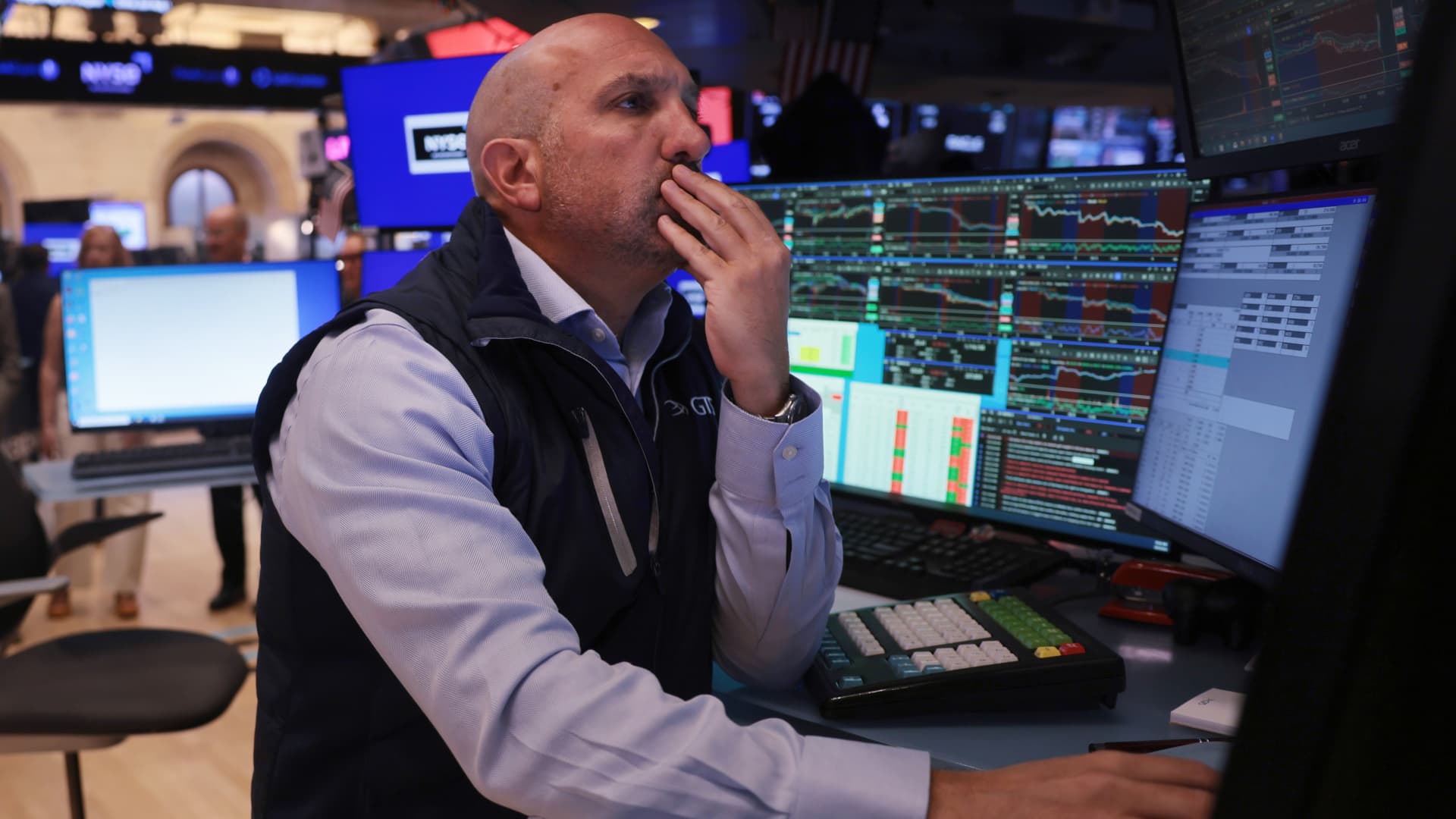
That $10 billion increase was enough to send the stock down more than 10%, wiping roughly $175 billion from Meta’s market cap, CNBC noted.
Anmuth’s $725 price target is based on 21x his 2027 GAAP EPS estimate of $34.01, according to Investing.com. At current levels, that implies roughly 8% upside. For a stock JPMorgan was previously overweighting, it is a dramatically more cautious stance.
Why Meta’s capex hike triggered a downgrade
The core of Anmuth’s concern is not what Meta is spending on AI. It is whether Meta can generate competitive returns on that spending beyond advertising.
“We believe full-stack AI competition is intensifying and Meta has a more challenging path to returns on heavy AI capex beyond advertising,” he wrote in the note.
The contrast he drew is pointed. Google Cloud backlog nearly doubled quarter over quarter. AWS backlog grew 50% quarter over quarter. Both companies have deep enterprise tech stack integrations, silicon supply advantages, and model diversity that give them clearer multi-year ROIC paths on AI capital spending, according to 24/7 Wall St.
Meta, by contrast, is primarily an advertising business. Its AI investment is enormous, but the path from that investment to non-advertising revenue remains unclear.
Anmuth projects Meta’s capex will grow 42% to $202 billion in 2027, resulting in negative free cash flow of $4 billion in 2026 and $24 billion in 2027, according to Investing.com. That trajectory is what moved JPMorgan off its bullish stance.
What Meta’s Q1 2026 actually showed
The underlying Q1 results were strong. Meta reported revenue of $56.31 billion, up 33% year over year, the strongest quarterly growth since 2021, according to Meta IR. Ad impressions rose 19% year over year. Family daily active people reached 3.56 billion, Meta IR confirmed.
Net income reached $26.8 billion, or $10.44 per diluted share. That figure was inflated by an $8.03 billion one-time tax benefit tied to U.S. Treasury R&D guidance, according to 24/7 Wall St.
More Wall Street
- JPMorgan resets S&P 500 price target for the rest of 2026
- Vanguard challenges the S&P 500 as a one-stop strategy
- Goldman Sachs resets Broadcom stock forecast
Stripping that out, the core earnings picture is still solid but less spectacular than the headline number suggests.
One miss stood out. Daily active people came in at 3.56 billion, below the Wall Street estimate of 3.62 billion. Meta attributed the shortfall to the Iran war and WhatsApp restrictions in Russia, according to Investing.com.
The AI spending problem in numbers
The capex raise is striking because it is the second consecutive upward revision. Meta had set its original 2026 capex range at $115 billion to $135 billion in January. It is now $125 billion to $145 billion. CFO Susan Li attributed the increase to higher memory-chip pricing and additional data center costs, according to Investing.com.
Q1 capex alone reached $19.8 billion, up 47% year over year, Meta IR confirmed.
Reality Labs posted an operating loss of $4.03 billion in Q1, 24/7 Wall St reported. On the more optimistic side, Meta AI glasses continue to perform well. Daily users of the glasses tripled year over year in Q1. More than 4 million advertisers are now using at least one generative AI creative tool, according to Meta IR.
Key figures from Meta’s Q1 2026 earnings and JPMorgan’s response:
- JPMorgan new rating: Neutral, downgraded from overweight, analyst Doug Anmuth, according to CNBC
- JPMorgan price target: $725, cut from $825, based on 21x 2027E GAAP EPS of $34.01, Investing.com confirmed
- Meta Q1 2026 revenue: $56.31 billion, up 33% year-over-year, according to Meta IR
- Meta Q1 2026 EPS: $10.44, includes $8.03 billion one-time tax benefit, Meta IR indicated
- Meta family daily active people: 3.56 billion, below estimate of 3.62 billion, Investing.com reported
- Meta 2026 capex guidance: $125 billion to $145 billion, raised from $115 billion to $135 billion, according to Meta IR
- JPMorgan projected 2026 free cash flow: Negative $4 billion, Investing.com shared
- JPMorgan projected 2027 free cash flow: Negative $24 billion, Investing.com noted
- Meta stock decline on April 30: More than 10%, erasing roughly $175 billion in market cap, according to CNBC
- Reality Labs Q1 2026 operating loss: $4.03 billion, Meta IR reported
Zamek/Getty Images
Where the rest of Wall Street stands on Meta
JPMorgan’s downgrade stands out because it diverges from most other analysts. Barclays, Cantor Fitzgerald, and TD Cowen all adjusted their price targets while keeping bullish ratings, treating the sell-off as a valuation reset rather than a broken thesis, according to 24/7 Wall St.
The division reflects a genuine disagreement about what Meta’s AI spending ultimately produces. The bulls argue Meta’s advertising engine remains so powerful that even aggressive capex cannot dent margins enough to matter.
The bears, now including JPMorgan, argue that without a visible path to AI-driven revenue outside of advertising, the return profile on $125 billion to $145 billion in annual spending is very difficult to underwrite.
What Meta investors should watch from here
Anmuth flagged two near-term headwinds that investors should monitor heading into Q2: tougher year-over-year revenue comparisons, and the European Limited Privacy Advertisements rollout, which is expected to pressure revenue beginning in Q2, according to Investing.com.
The longer-term watch is Meta Superintelligence Labs and the Muse model family. Anmuth acknowledged that the release of Muse Spark is “the first step towards META‘s goal of pushing the frontier and delivering personal superintelligence to billions of users.”
But the key question is whether Muse models can drive incremental revenue beyond advertising. Until that question is answered, JPMorgan believes shares could remain under pressure.
For investors, the practical message is that Meta’s business is not broken. The advertising engine is growing at 33% year over year. User engagement is at record levels. But the stock is now in a phase where the market needs to see the AI spending translate into returns that extend beyond the ad business.
JPMorgan is saying that visibility does not yet exist. And until it does, the easy part of the Meta trade may be behind us.
Related: Mark Zuckerberg shocks Meta employees with new requirement