







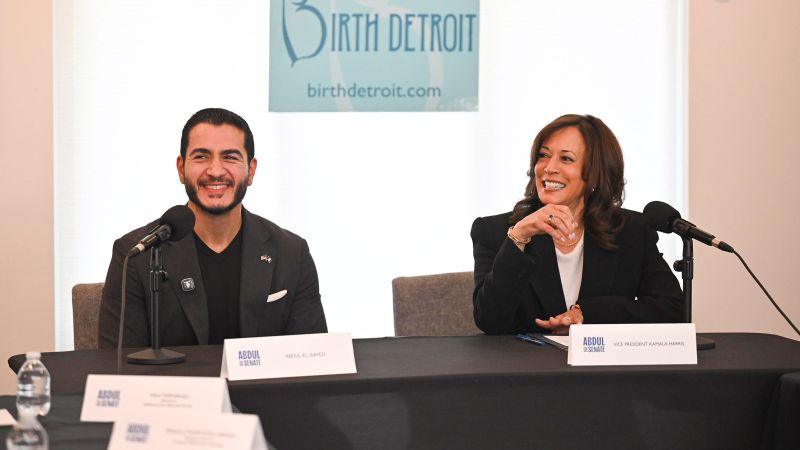

Kamala Harris descended upon Michigan this week to throw her weight behind Senate nominee Abdul El-Sayed, signaling a strategic effort to unify a fractured Democratic base ahead of the midterm elections. During a series of high profile events, including a roundtable focused on Black maternal healthcare, Harris praised El-Sayed as a future national voice and a necessary check against the current administration. The partnership marks a significant pivot for El-Sayed, a progressive who previously aligned himself with the Uncommitted movement during the last election cycle, while Harris seeks to leverage her influence to shore up support among Black voters who were divided during a contentious primary.
In Detroit, Harris did not mince words regarding the stakes of the upcoming vote, describing the Trump administration as the most corrupt and incompetent in American history. Speaking with faith leaders at a fireside chat, she warned that Republicans are actively attempting to obstruct the democratic process through various hurdles. Her message was clear: victory depends entirely on massive voter turnout that makes any attempt at rigging impossible. By focusing on issues like diversity, equity, and inclusion in healthcare, Harris aimed to bridge the gap between El-Sayed’s progressive platform and the priorities of traditional Democratic constituencies.
The visit carries implications far beyond the immediate midterm race. With Michigan slated as one of the first states to vote in the next Democratic nominating process, Harris’s visibility suggests she is eyeing her own political future despite ongoing debates within her party about her trajectory. While some local supporters expressed enthusiasm for seeing her potentially seek the presidency again in 2028, others remained cautious, noting that she has kept a lower profile since 2024. Regardless of long term ambitions, her presence serves as a critical asset for Democrats needing to secure Gary Peters’ vacated seat to regain control of the Senate.
Despite the show of unity, challenges remain for El-Sayed as he faces Republican nominee Mike Rogers. Local leaders indicated that winning over certain segments of the electorate remains a work in progress due to previous friction during the primaries and controversies surrounding foreign policy stances. However, by appearing alongsideHarris and emphasizing shared goals in public health and civil rights, El-Sayed hopes to transform his image from a polarizing insurgent into a viable general election winner capable of holding one of the country’s most vital swing states.