




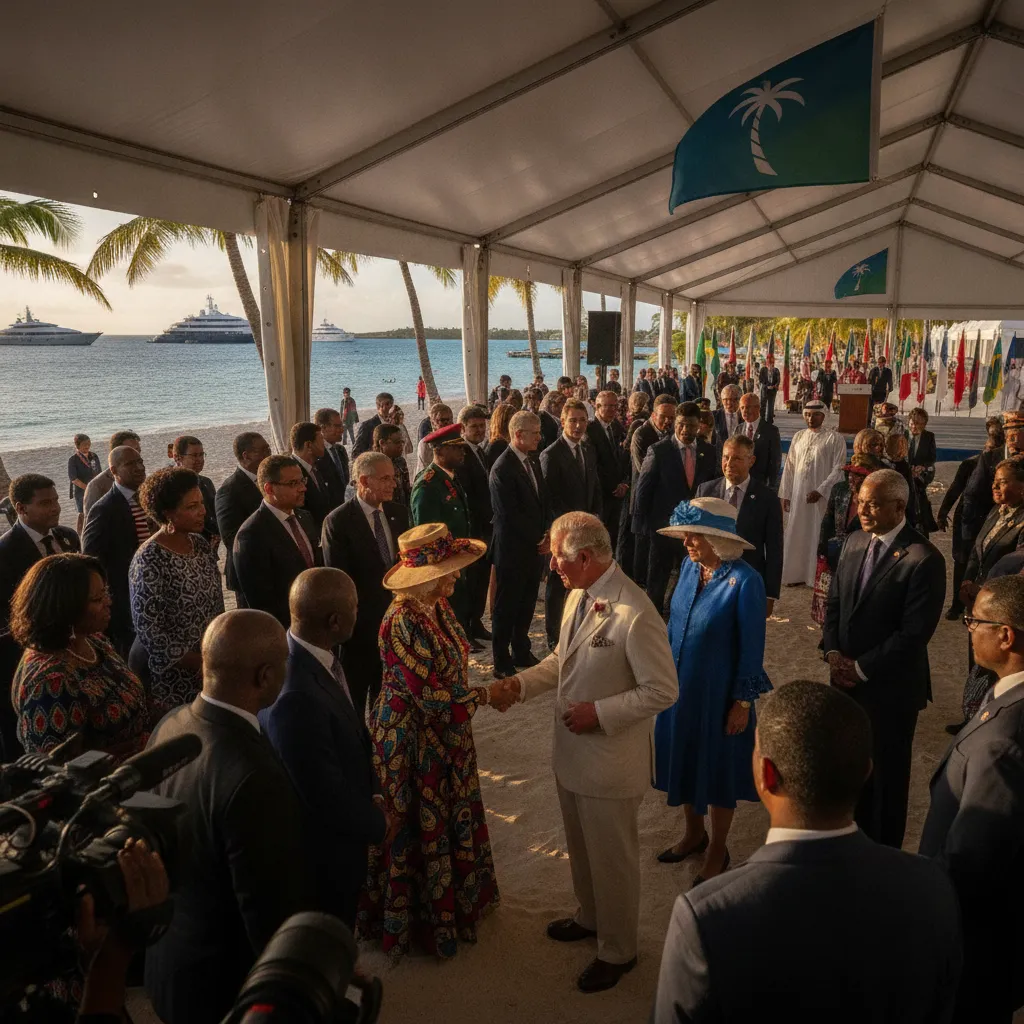

The small shores of Antigua have become the center of international diplomacy this week as dozens of heads of state gather for the biennial Commonwealth Heads of Government Meeting. Representing roughly a third of the global population, more than 50 leaders from former British colonies, alongside observers from nations like Brazil and the United Arab Emirates, are convening to navigate a period of intense geopolitical volatility. The arrival of King Charles III and Queen Camilla marks a high point for the summit, though the royal presence arrives amidst pressing calls from several Caribbean leaders to formally address the legacy of slavery through reparations.
Secretary General Shirley Botchwey emphasized that the gathering comes at a critical juncture where economic shocks and trade conflicts are felt directly by ordinary citizens. With global markets disrupted by aggressive tariff hikes and shifting alliances, Botchwey argued that strengthening intra Commonwealth trade is no longer just an option but a necessity for survival. By reducing barriers between member states, she believes these nations can insulate themselves from external economic warfare and build more resilient domestic markets.
Beyond trade, the agenda is heavily focused on the existential threat of climate change, particularly for the 49 member nations bordered by oceans facing rising sea levels. Plans are underway to establish funds aimed at transitioning away from fossil fuels toward renewable energy sources. Simultaneously, there is a push to bridge the digital divide via a new initiative intended to equip ten million young adults with essential tech skills through partnerships with philanthropic organizations and the private sector.
While government officials focus on policy, parallel forums involving civil society are pushing for deeper discussions on indigenous rights and freedom of expression. Ricardo Aiken of the Commonwealth Foundation noted that for those living in some of the world’s most vulnerable regions, these meetings must result in tangible financial accessibility rather than mere rhetoric. As the four day event unfolds, the goal remains clear: transforming historical ties into modern strategic alliances capable of weathering a turbulent century.