







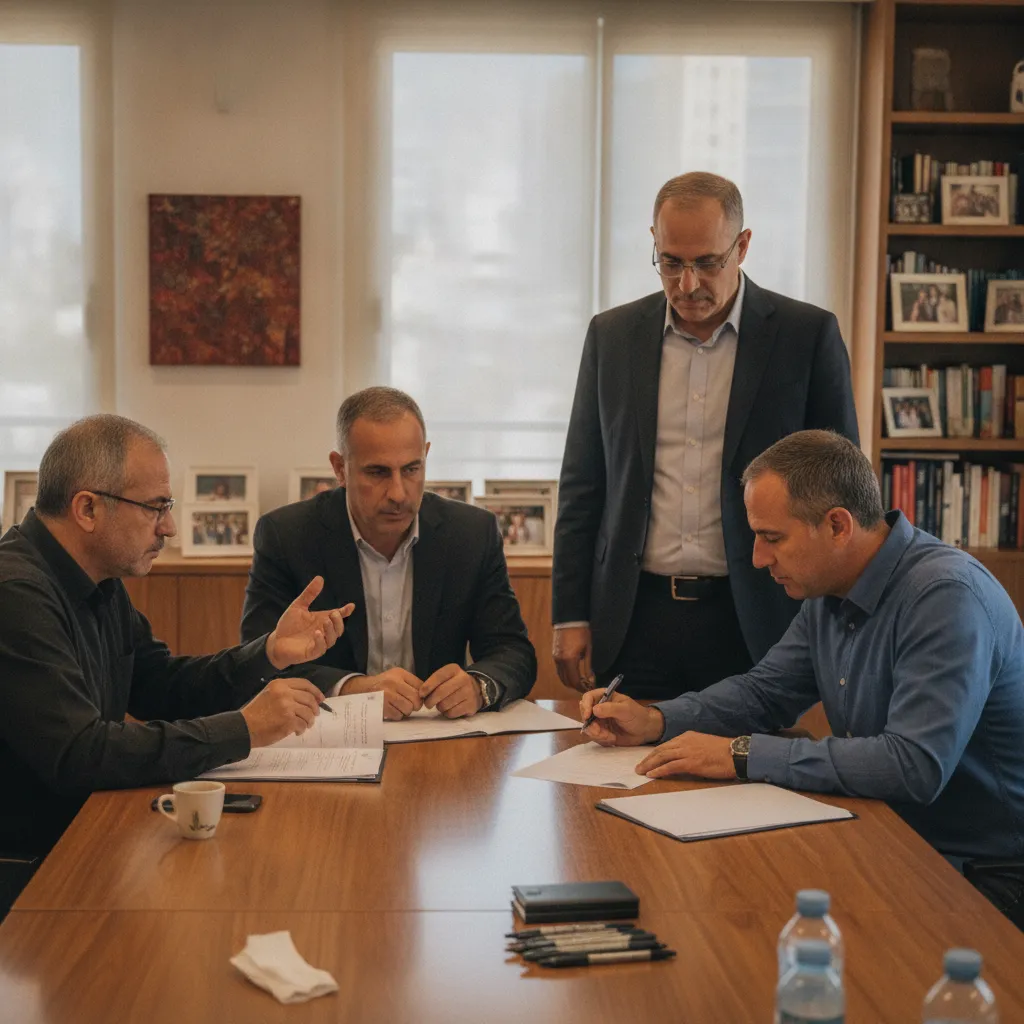

A group of five prominent political rivals recently gathered at the Tel Aviv home of Yair Lapid to sign a non aggression pact aimed at removing Benjamin Netanyahu from power in the upcoming October 27 election. The alliance brings together an eclectic mix of figures including former Prime Minister Naftali Bennett, former Chief of Staff Gadi Eisenkot, Yair Golan, and Avigdor Liberman. Despite deep ideological divides, these leaders issued a joint statement claiming their shared priority is the creation of a statesmanlike Zionist government focused on national repair and reconstruction.
While the coalition presents a united front against Netanyahu, analysts suggest that the shift in leadership may be more about style than substance. With the exception of Yair Golan and his Democrats party, most of these contenders hold firmly right wing views. None of the signatories are currently committed to establishing a Palestinian state, nor have they challenged the fundamental nature of Israel’s military operations in Gaza or its strikes across Lebanon and Iran. Instead, much of their criticism focuses on how these actions affect Israel’s international image rather than the morality or legality of the campaigns themselves.
Among the key players is Gadi Eisenkot, whose new Yashar party advocates for professional governance and mandatory military service for ultra Orthodox Jews. As a former military chief who lost family members during the conflict in Gaza, Eisenkot has connected deeply with a war weary public, though he remains hawkish on security and skeptical of American influence over Israeli interests. Similarly, the joint ticket consisting of Naftali Bennett and Yair Lapid seeks a purely Zionist coalition, explicitly ruling out cooperation with Arab parties despite having done so in previous administrations.
Ultimately, this emerging bloc represents a challenge to Netanyahu’s personality and legal troubles rather than his core ideology. Observers note that while candidates like Bennett and Liberman lack Netanyahu’s specific corruption allegations or his dependence on far right ministers like Itamar Ben Gvir, they remain rooted in the same nationalist framework. For voters seeking a radical departure from current policies regarding Palestinian independence or regional diplomacy, this newly formed alliance offers little more than a different set of faces steering the same course.