







Inside the walls of the West Wing, the push for midterm victory has taken the form of an unusual game. White House Chief of Staff Susie Wiles and presidential assistant Meghan Bauer have reportedly implemented an unofficial travel competition designed to turn Cabinet secretaries into campaign surrogates. By tracking who visits swing districts and battleground states, the administration is essentially running a secret points system to ensure that high ranking officials are promoting President Trump’s agenda exactly where it counts most politically.
The stakes of this internal leaderboard range from simple bragging rights to rumored rewards like a private dinner with the president and his family. While some White House officials downplay the idea of penalties, the pressure to perform is palpable. One Cabinet secretary admitted to declining an event in Manhattan specifically out of fear that visiting a solidly blue area would dock their score. This culture of constant movement underscores a broader mandate from Wiles, who previously warned agency heads to curb international travel in favor of domestic stumping.
The consequences for ignoring these priorities have already proven severe. Former Homeland Security Secretary Kristi Noem was reportedly pushed out partly due to optics involving extensive leisure travels abroad and in non competitive regions, contrasting sharply with the image of a hard working executive branch focused on electoral gains. According to former press secretary Karoline Leavitt, there are often half a dozen secretaries on the road simultaneously in targeted districts, reflecting the president’s expectation that his team match his own relentless pace.
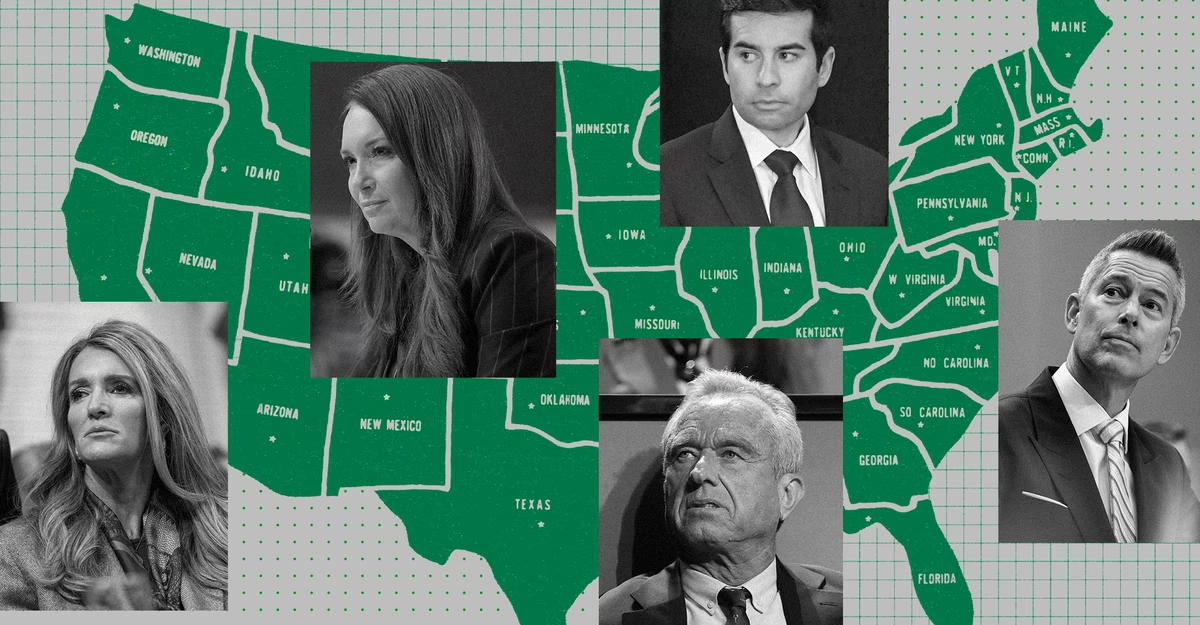
Data provided by the White House shows a heavy concentration of effort in critical areas, with Texas leading at forty six visits, followed closely by Pennsylvania and New York. An independent analysis suggests that Small Business Administration head Kelly Loeffler may currently be leading the pack based on her frequent trips to contested zones across Georgia and Virginia. While some roles naturally lend themselves more to travel than others, the overall strategy reveals an administration treating its leadership less like traditional bureaucrats and more like a mobile political strike force heading into November.