







Why Did Poland’s President Reject the MiCA Bill Again?
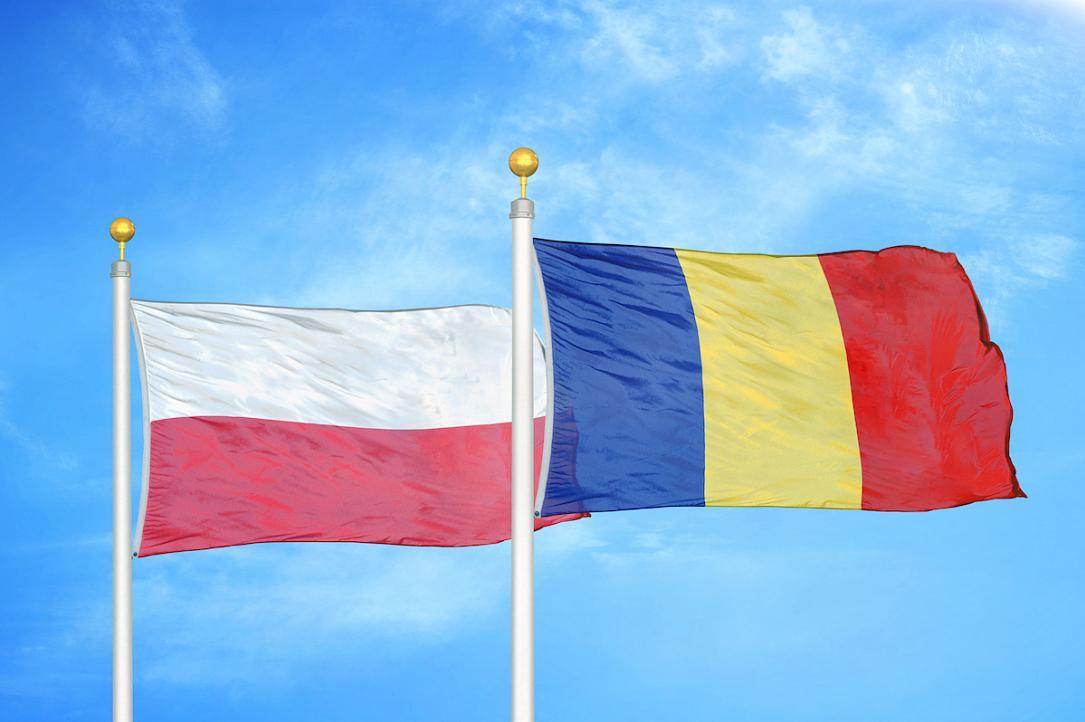
Poland’s president has vetoed a second bill designed to align the country’s crypto regulations with the European Union’s Markets in Crypto-Assets Regulation (MiCA), adding fresh uncertainty for domestic platforms ahead of a key transition deadline.
President Karol Nawrocki declined to sign Bill 2064, according to a statement from his office. It was the second time he blocked legislation meant to implement MiCA, after vetoing a similar measure in December. Nawrocki described the latest proposal as “practically identical” to the previously rejected Bill 1424.
The decision followed a warning from Poland’s Financial Supervision Authority (KNF), which said the country has yet to designate a competent authority to oversee the crypto market under MiCA rules. The regulator highlighted the July 1, 2026 transition deadline, when full compliance across the EU framework becomes mandatory.
In explaining his stance, Nawrocki said: “I will not sign a wrong law just because it was passed again by the parliamentary majority. A wrong law that passed a hundred times still remains a wrong law.” He added, “Poland should attract innovation, not push it away.”
Investor Takeaway
What Does the Veto Mean for Local Crypto Platforms?
The absence of implementing legislation leaves Polish crypto companies without a clear legal route to obtain a MiCA license at home. Under the EU framework, firms licensed in one member state can provide services across the bloc. However, Poland has not yet established the necessary supervisory structure to process applications domestically.
This creates an uneven playing field. Foreign exchanges that have secured MiCA authorization in other EU jurisdictions can offer services in Poland, while local firms must wait for national rules to be finalized.
“Foreign entities that obtain a MiCA license in their home countries will be able to provide services in Poland, while Polish companies currently have no formal path to begin the licensing process domestically,” Kanga Exchange co-CEO Sławek Zawadzki said. “This results in regulatory asymmetry.”
Zawadzki added that the company had anticipated delays. “From the beginning, we considered the possibility that the MiCA-implementing law in Poland might not enter into force in time, and we prepared alternative jurisdictional solutions accordingly,” he said.
Could Firms Relocate or Seek Licenses Abroad?
Some companies have already structured their operations outside Poland to manage regulatory risk. Przemysław Kral, CEO of Zonda Crypto, noted that the exchange — originally established in Poland — has operated from abroad for years.
“Although we are a company with Polish roots and the largest player in the crypto industry on the Polish market, we have been operating outside Poland for years,” Kral said. Zonda has pursued a MiCA license in another EU jurisdiction and plans to passport that authorization into Poland.
“We are confident that we will remain a key player on the market. However, many small Polish crypto companies will lose the opportunity to operate on the market,” he added.
The risk for smaller firms is straightforward: without domestic licensing clarity, compliance costs rise and access to banking or institutional partners may tighten. Larger exchanges with cross-border structures are better placed to absorb that friction.
Investor Takeaway
Is a New Proposal on the Horizon?
The political debate over MiCA implementation appears far from settled. Critics of the rejected bills, including some industry advocates, argued that the proposals went too far and risked overregulating the sector.
In the wake of the latest veto, economist Krzysztof Piech said he is working on a revised, more crypto-friendly proposal to implement MiCA in Poland. He indicated on social media that a draft has been prepared and is being finalized.
With the EU-wide deadline approaching, Poland must either pass revised legislation or risk prolonged uncertainty for its domestic crypto market. Until then, companies operating in the country face a split framework: EU-level rules advancing on schedule, and national-level implementation still unresolved.