




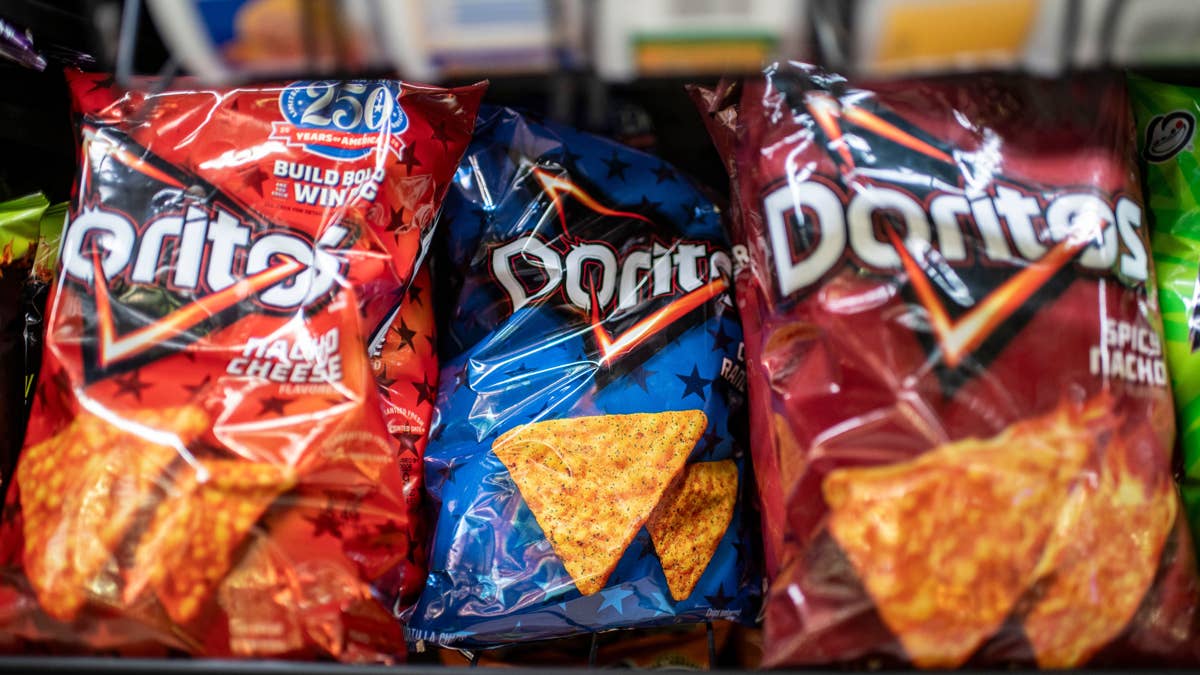

PepsiCo has spent decades building some of the world’s most recognizable snack brands. From Lay’s and Doritos to Cheetos and Cracker Jacks, the company has built a portfolio that reaches just about every cranny of the snack aisle.
Now, it’s looking for new ways to put those brands in front of consumers.
Over the last year, PepsiCo has made a focused effort to bring its food brands beyond the snack aisle, working with restaurants, grocery stores, and convenience retailers to turn familiar bites into meal ingredients.
It’s a strategy designed to keep some of PepsiCo’s biggest food brands relevant as consumers’ tastes and eating habits evolve.
PepsiCo is taking its snacks beyond the aisle
“Across restaurants, franchises, retailers and quick-service menus, PepsiCo foods and flavors, including Flamin’ Hot, Doritos and other portfolio favorites… are being reimagined as enticing menu items built for real meal occasions,” the company said in a press release earlier this year.
These new menu items have shown up in half a dozen places so far, with more drops planned for the end of the year.
In August, Subway confirmed the launch of Doritos Hot Honey Nachos. The limited-time offering starts with a layer of Nacho Cheese-flavored Doritos topped with classic nacho fixings and doused in hot honey sauce.
The menu item is a follow-up to 2025’s Foot-Long Nachos, which, at just $5, were a fan favorite.
Subway isn’t the only fast food chain that’s turned a Pepsi snack into a menu item.
KFC locations in Canada are offering KFC x Doritos Loaded, a limited-edition nacho-style item that’s topped with original breaded chicken tenders, and Osmow’s has The Walking Shawarma, its signature shawarma platter served with Sweet Chili Heat Doritos.
Grocery store chain Kroger and convenience store chain Circle K are also getting in on the menu integrations, offering Flamin’ Hot Boneless Chicken Wings (boneless chicken bites coated in Flamin’ Hot Cheeto breading) to consumers at several thousand locations.
PepsiCo wants to keep its biggest brands relevant
While these collaborations feel spontaneous and trendy to consumers, they didn’t just happen on a whim. Rather, they are a direct result of PepsiCo’s long-term growth strategy.
“These collaborations help keep our brands culturally relevant,” Janelle Rowe, senior vice president of foodservice at PepsiCo, told TheStreet. “Food culture evolves quickly, particularly among younger consumers, and menu innovation allows our brands to participate in those conversations in authentic ways.”
More PepsiCo:
- Pepsi fights a convenience-store problem that’s not Coca-Cola
- Convenience store giant takes on Coca-Cola and Pepsi
- Coca-Cola and Pepsi rival shuts down
That strategy is particularly important as attitudes around snacking are changing.
As GLP-1 use rises and consumers become more health conscious, many shoppers are cutting back on traditional snack foods such as chips and cookies.
“Consumers have moved from snacking on autopilot to making much more deliberate decisions about what they eat and how often,” Suzy Davidkhanian, vice president and principal analyst at eMarketer, told Reuters in July.
PepsiCo is feeling the effects of that shift.
Sales in the Dorito maker’s food business declined by 2% in the second quarter of the 2026 fiscal year, according to the company’s earnings report. Overall sales volumes in the sector have dropped four times over the last six quarters.
As a result, the company is working to find new ways to make its existing products appeal to customers.
“Many of these [collaborations] start with what we’re already seeing consumers do,” Rowe told me. “People are increasingly incorporating their favorite brands and flavors into meals, recipes and food experiences. We’re working with operators to bring those ideas to life at scale.”
When the collaborations are executed well and really land with diners, the effect is positive for Pepsi, Rowe says.
“[The collaborations] can create a halo effect for our brands,” she told me. “Consumers encounter familiar brands in new settings, which can strengthen awareness, engagement and affinity across our broader portfolio.”
For PepsiCo, the hope is that this increased engagement ultimately translates into stronger demand for its food brands.
But the success of these collaborations doesn’t mean Pepsi sees its food brands fully transitioning from finished products into ingredients.
“We don’t see it as an either-or proposition,” Rowe told me.
“Consumers continue to enjoy our brands in their traditional forms, and we expect that will remain true,” she continued. “At the same time, consumers are increasingly showing us that they want to experience those same flavors in new ways, whether that’s through menu items, recipes, food hacks or broader culinary experiences.
“Ultimately, consumers are showing us how they want to engage with our brands,” she said. “Our role is to listen to those signals and work with customers to bring them to life.”
Related: Kroger has a problem Walmart and Amazon will never have