




A downturn in the luxury retail industry at the beginning of 2025 has continued and affected major retailers this week.
Luxury retailers in 2025 closed store locations and, in some cases, filed for bankruptcy protection.
Luxury retailers file for bankruptcy
Lugano Diamonds and Jewelry filed for Chapter 11 bankruptcy in November 2025, seeking a sale to a stalking-horse bidder, Enhanced Retail Funding.
Another luxury retailer, footwear manufacturer Palm Beach Sandal Company, which was founded in the 1960s and whose products were worn by a former First Lady Jacqueline Kennedy, filed for Chapter 11 protection in December 2025 to reorganize.
The downturn is affecting not only U.S. luxury retailers, but also the luxury sector worldwide since early 2025, according to global consultancy Bain & Company.
“Worldwide luxury spending, historically sensitive to uncertainty, is coming under intensified pressure as luxury consumers’ confidence is eroded by current economic upheavals, geopolitical and trade tensions, currency fluctuations, and financial market volatility, today’s report warns,” Bain wrote in a June 2025 statement.
“This is despite a relatively upbeat end to 2024 for the luxury sector, bolstered by a double-digit rise in tax-free spending in Europe, as well as decreased U.S. market volatility at the time.”
Younger generations not impressed by luxury brands
“Luxury brands are contending with not only weakening consumer sentiment but also a growing disillusionment with their offerings among younger generations, notably Generation Z,” the statement said.
The economic downturn in the luxury industry has continued into 2026 with a major bankruptcy filing.
Shutterstock
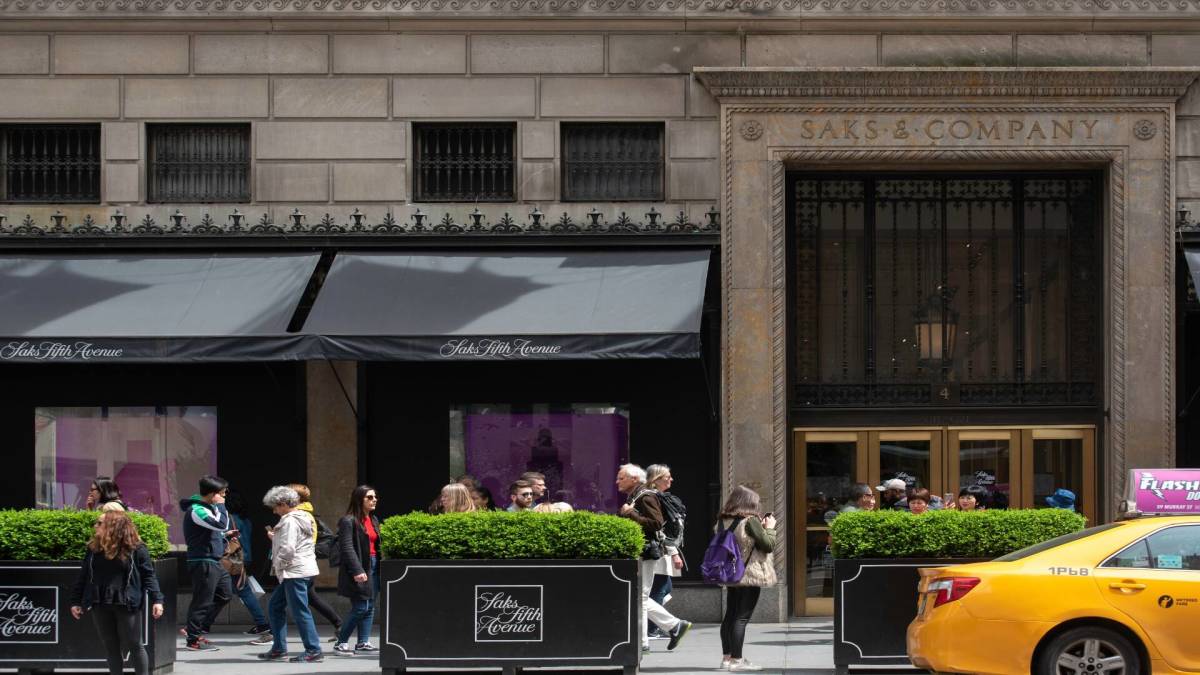
Saks Fifth Avenue files for bankruptcy protection
Luxury retail chain Saks Fifth Avenue’s parent company filed for Chapter 11 bankruptcy, facing severe liquidity constraints that prevented the company from paying bills and acquiring inventory to meet customer demand, according to court filings.
Saks Global Enterprises LLC and 112 affiliates filed their petitions on Jan. 13 and 14, listing $1 billion to $10 billion in assets and liabilities.
Neiman Marcus purchase impacted Saks liquidity
Saks faced immediate liquidity challenges following its $2.7 billion acquisition of Neiman Marcus in 2024, as its capital structure became unsustainable, according to a declaration from Chief Restructuring Officer Mark Weinsten of Berkeley Research Group LLC. The company’s liquidity position became constrained, which made paying its vendors on time difficult.
The debtor listed $3.4 billion in funded debt obligations, according to court filings.
The debtor’s top 10 unsecured creditors include Chanel Limited, owed over $136 million; Kering S.A., owed over $59 million; Rosen-X, owed over $41 million; Capri Holdings Ltd., owed over $33 million; Mayhoola LLC, owed over $33 million; PriceWaterhouseCoopers, owed over $30 million; Compagnie Financiere Richemont SA, owed over $30 million; Ermenegildo Zegna N.V., owed over $26 million; LVMH Moet Hennessy Louis Vuitton SE, owed over $25 million; and Akris Inc., owed over $23 million.
Saks Global’s largest unsecured creditors:
- Chanel Limited, owed over $136 million
- Kering S.A., owed over $59 million
- Rosen-X, owed over $41 million
- Capri Holdings Ltd., owed over $33 million
- Mayhoola LLC, owed over $33 million
- PriceWaterhouseCoopers, owed over $30 million
- Compagnie Financiere Richemont SA, owed over $30 million
- Ermenegildo Zegna N.V., owed over $26 million
- LVMH Moet Hennessy Louis Vuitton SE, owed over $25 million
- Akris Inc., owed over $23 million
The debtor will seek approval of up to $1 billion in new money, debtor-in-possession financing from an ad hoc group of Saks Global’s senior secured bondholders to fund the bankruptcy case. The ad hoc group will also fund a $500 million exit loan facility, and the company has secured about $240 million in incremental liquidity from its asset-based lenders, according to a company statement.
The debtor arranged the new liquidity through three DIP loans, totaling $5.85 billion, which include roll-ups of prepetition debt, according to court filings.
Saks Global operates 33 Saks Fifth Avenue, 81 Saks Off 5th, 36 Neiman Marcus, 2 Bergdorf Goodman, and 5 Last Call stores. It also operates Saks Off 5th Digital and Horchow home furnishings e-commerce businesses.
The company employs 14,610 full-time and 2,220 part-time workers.
Saks Global Enterprises businesses:
- Saks Fifth Avenue
- Saks Off 5th
- Neiman Marcus
- Bergdorf Goodman
- Last Call
- Saks Off 5th Digital
- Horchow
Several of Saks’ vendors filed lawsuits against the company seeking payments for inventory that they had provided over the last three years, according to a report from TheStreet’s Daniel Kline.
More bankruptcies
- 64-year-old furniture store franchisee files Chapter 11 bankruptcy
- Golf legend’s iconic brand files for Chapter 11 bankruptcy
- Major health services provider files for Chapter 11 bankruptcy
“Saks Inc. had a persistent and troubling pattern of paying vendors late in 2025, pointing to sustained liquidity problems,” Ragini Bhalla, head of brand and spokesperson for credit report provider Creditsafe, said in a statement.
“Towards the second half of 2025, Saks appeared to be managing its cash flow by deferring payables,” Bhalla said.
A growing number of Saks’ bills fell into the delinquent category of 91 or more days late between July and December 2025, with 16.43% in July, 24.46% in October, 45.33% in November, and 47.84% in December, according to data from Creditsafe.
“And given that Saks also missed debt payments and filed for bankruptcy, it increases the likelihood that some vendors may never get paid for work completed or orders fulfilled,” Bhalla said.
Related: Costco quietly reverses a decade-old food court decision