







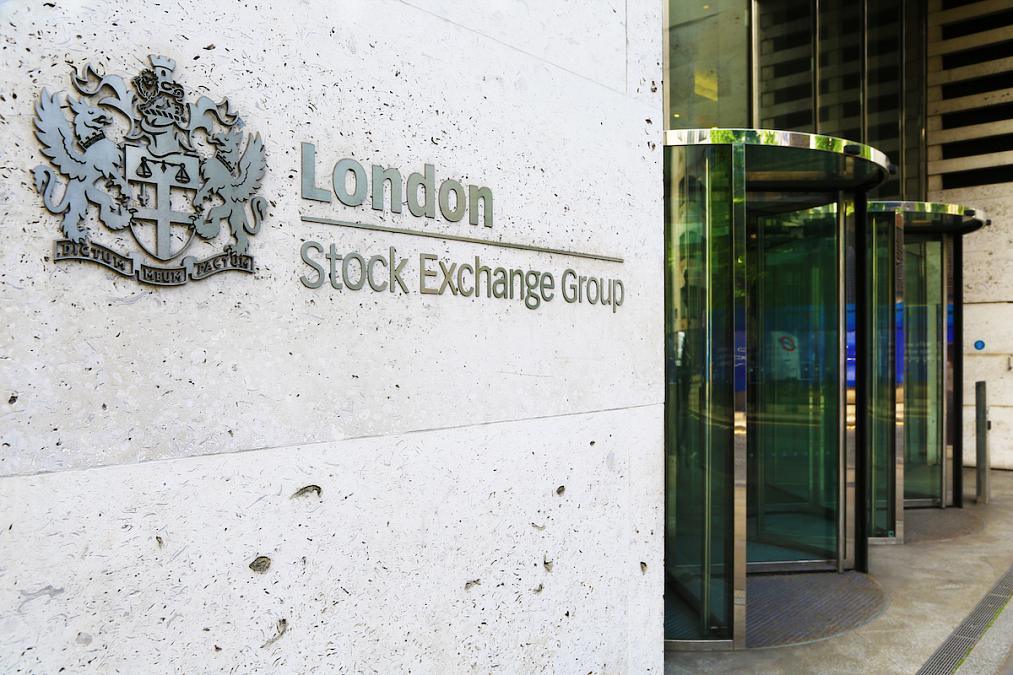

LSEG has launched a new Trade Surveillance platform aimed at helping financial institutions identify and investigate potential market abuse and financial crime more efficiently, as regulatory expectations and trading behaviours continue to evolve across global markets.
The new service is live with two initial solutions covering MiFID-regulated instruments and foreign exchange trading, reflecting LSEG’s focus on areas where surveillance obligations are both complex and resource-intensive for market participants.
LSEG said the launch responds to growing pressure on firms to monitor increasingly sophisticated trading activity, as traditional surveillance tools struggle with rising data volumes, fragmented liquidity and the cost of maintaining in-house systems.
Designed for Evolving Market Behaviour and Regulatory Demands
According to LSEG, the Trade Surveillance platform is built to address inefficiencies that have emerged as markets and regulations have become more complex. As firms face heightened scrutiny under market abuse and financial crime regimes, surveillance systems are expected to deliver deeper insights while controlling operational costs.
The platform is underpinned by LSEG’s proprietary surveillance technology, which already processes billions of trade and order messages across its venues each day. By combining private trade data with contextual public market data, reference data and news, Trade Surveillance aims to deliver cross-venue alerts that help firms identify suspicious behaviour with greater accuracy.
LSEG said this approach is intended to reduce false positives and improve behavioural anomaly detection, enabling compliance teams to focus on genuinely higher-risk activity rather than being overwhelmed by noise.
LSEG is positioning Trade Surveillance as a response to rising regulatory complexity, combining proprietary technology and trusted data to improve efficiency and reduce false positives.
MiFID and FX Solutions Target High-Burden Surveillance Areas
Trade Surveillance for MiFID is designed as a multi-market, multi-asset solution for participants trading MiFID instruments. LSEG said it uses the same datasets relied upon by UK and EU regulators for market abuse detection, aligning firms’ internal surveillance with supervisory expectations.
The MiFID solution delivers cross-venue, cross-product alerting through LSEG’s consolidated European orderbook, which is built using data from more than 40 UK and EU trading venues and approved publication arrangements. For clients already using LSEG’s Regulatory Reporting Solutions ARM, the service is described as “plug and play,” requiring no additional technical build or data integrity work.
The FX solution is targeted at spot FX participants trading on LSEG FX Dealing, Advanced Dealing and Matching platforms, as well as those active on third-party venues captured through LSEG’s Trade Notification network. It is delivered via a secure web-based interface with no integration required, allowing clients to view their private trade data alongside the public Spot Matching orderbook.
By launching dedicated MiFID and FX solutions, LSEG is focusing on surveillance obligations where data fragmentation and regulatory alignment are most challenging.
LSEG Positions Trade Surveillance as a Compliance and Risk Tool
LSEG executives framed the launch as part of a broader effort to help firms strengthen compliance while managing operational risk. Liam Smith, COO of LSE plc and Digital & Securities Markets at LSEG, said: “We are delighted to bring Trade Surveillance to the market. By leveraging LSEG’s proprietary technology and robust data, Trade Surveillance enables firms to strengthen compliance, reduce operational risk, and gain actionable insights into trading behaviour.”
Bruce Kellaway, CEO of Regulatory Reporting Solutions at LSEG, emphasised regulatory alignment, noting: “Ensuring compliance with the Market Abuse Regulation remains fundamental to firms with regulatory obligations. With its methodology and data-sets aligned with UK and EU regulators, Trade Surveillance for MiFID offers a robust multi-market, cross-product and cost-effective solution that customers can adopt with minimal effort, to support firms in evidencing regulatory compliance.”
From an FX market perspective, Bart Joris, Head of FX Sell-Side Trading at LSEG, highlighted the importance of context in a fragmented market. “In a fragmented FX market, context is vital to help assess and manage regulatory risk,” he said. “Trade Surveillance for FX brings together trusted data as well as activity across LSEG FX platforms and third-party venues, enabling participants to better analyse trading behaviour and make insight-based decisions efficiently.”
LSEG is positioning Trade Surveillance as both a compliance enabler and a source of behavioural insight, aligned closely with regulator methodologies and market structure realities.
The launch of Trade Surveillance reflects a broader trend toward data-driven, regulator-aligned monitoring as financial markets become more complex and enforcement expectations rise. For firms operating across multiple venues and asset classes, the ability to contextualise trading behaviour using trusted data sources is increasingly seen as critical.
By leveraging its role as a market operator and data provider, LSEG is seeking to differentiate Trade Surveillance from legacy tools that rely heavily on static rules and fragmented datasets. The company argues that embedding regulatory-aligned data and technology directly into surveillance workflows can reduce both cost and risk.
As regulators continue to focus on demonstrable effectiveness in market abuse detection, platforms such as Trade Surveillance may become an important component of how firms evidence compliance while adapting to evolving market dynamics.
“`