






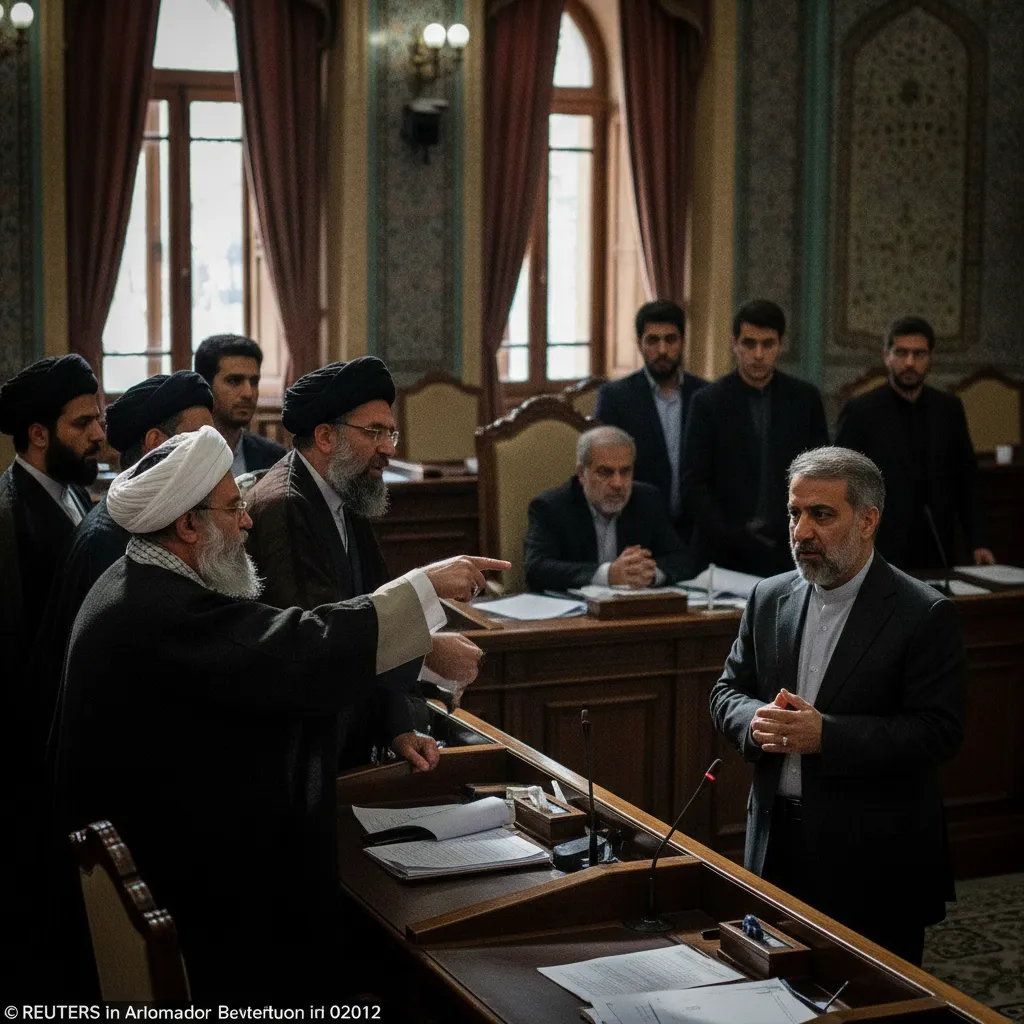

President Masoud Pezeshkian is facing a tightening vice in Tehran as hardline lawmakers intensify their campaign against his administration. The friction has reached a boiling point in parliament, where critics are now pushing for the impeachment of Foreign Minister Abbas Araghchi. Much of the anger stems from Araghchi’s recent meetings with U.S. negotiators during the United Nations General Assembly, with opponents claiming he bypassed official authorizations to conduct those talks. This push for removal comes even as the government struggles to navigate an escalating regional war and stagnant diplomatic efforts.
The instability is not confined to diplomacy, as the government also grapples with a deepening financial hemorrhage. The resignation of Oil Minister Mohsen Paknejad has failed to quiet the unrest, arriving at a time when oil exports have plummeted due to a U.S.-led blockade of the Strait of Hormuz. While Paknejad officially cited personal reasons for stepping down, analysts suggest that changing personnel does little to address a systemic crisis where transparency has vanished and critical revenue streams have slipped away from state control.
Adding to the chaos is a shadow economy managed by powerful entities like the Islamic Revolutionary Guard Corps. Experts note that circumventing international sanctions has become a highly lucrative private enterprise for those close to the center of power, leaving the formal government with limited influence over how oil is sold or where the money goes. By utilizing opaque channels and hidden networks, these factions ensure their own survival while shifting the blame for economic failure onto elected officials and moderate figures.
Political observers argue that this pattern is typical of Iran’s power structure, where hardliners allow moderate governments to take risks and then weaponize any perceived failures to consolidate their own influence. With inflation mounting and external pressures rising, there are growing fears that this cycle of internal sabotage will leave President Pezeshkian increasingly paralyzed just as the nation faces its most precarious moment since the return of major hostilities in the region.