







Investigators are piecing together the final moments of an Amazon cargo flight that ended in tragedy at Miami International Airport this past Sunday. Early analysis of flight data suggests the crew attempted to abort an unsteady landing just seconds before the aircraft overshot the runway and plowed into a shuttle van, killing five people. According to NTSB Chairwoman Jennifer Homendy, the evidence indicates a brief attempt to perform a go-around to retry the approach, but the effort appears to have come too late. Adding to the mystery, records show that the plane’s thrust reversers, which are essential for slowing down upon touchdown, were never deployed.
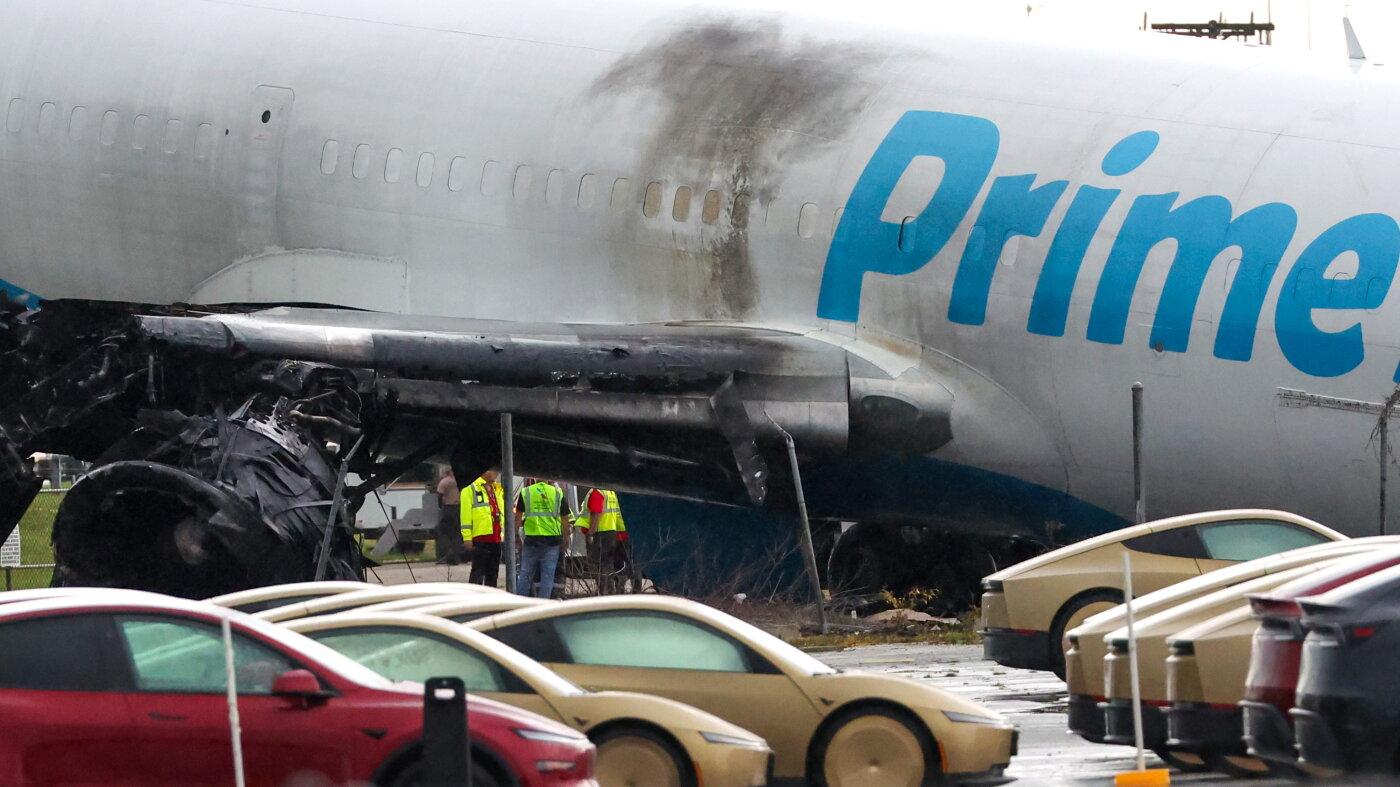
The scene remaining at the airport paints a grim picture of the impact. After barreling roughly 1,300 feet past the runway’s end, the jet smashed through a perimeter fence and collided with a van carrying members of a plane cleaning crew before finally hitting an SUV on a nearby city street. The wreckage includes a mangled white van and an SUV so severely damaged it was nearly unrecognizable. While the pilot and co-pilot have been released from the hospital, investigators are scheduled to interview them to understand if there was hesitation or perhaps a disagreement in the cockpit during those critical seconds.
Industry experts believe environmental factors played a significant role in the disaster. With storms brewing around Miami at the time of arrival from Puerto Rico, some analysts suggest a strong tailwind may have pushed the Boeing 767 well beyond its intended stopping point. There are now questions regarding why air traffic controllers did not shift the approach to allow for a headwind landing. Furthermore, federal officials are examining whether Miami’s lack of specialized runoff arresting systems—crushable materials designed to stop runaway jets—contributed to the severity of the crash.
The loss of life has sent shockwaves through both Amazon and Professional Ocean Service Corp., the company that employed those in the shuttle van. In statements released Tuesday, both companies expressed deep grief for the five men killed in what Jennifer Homendy described as an unthinkable accident for ground workers. As investigators review cockpit voice recordings and technical logs, they face a long road toward providing definitive answers, with a final report expected to take up to a year to complete.