







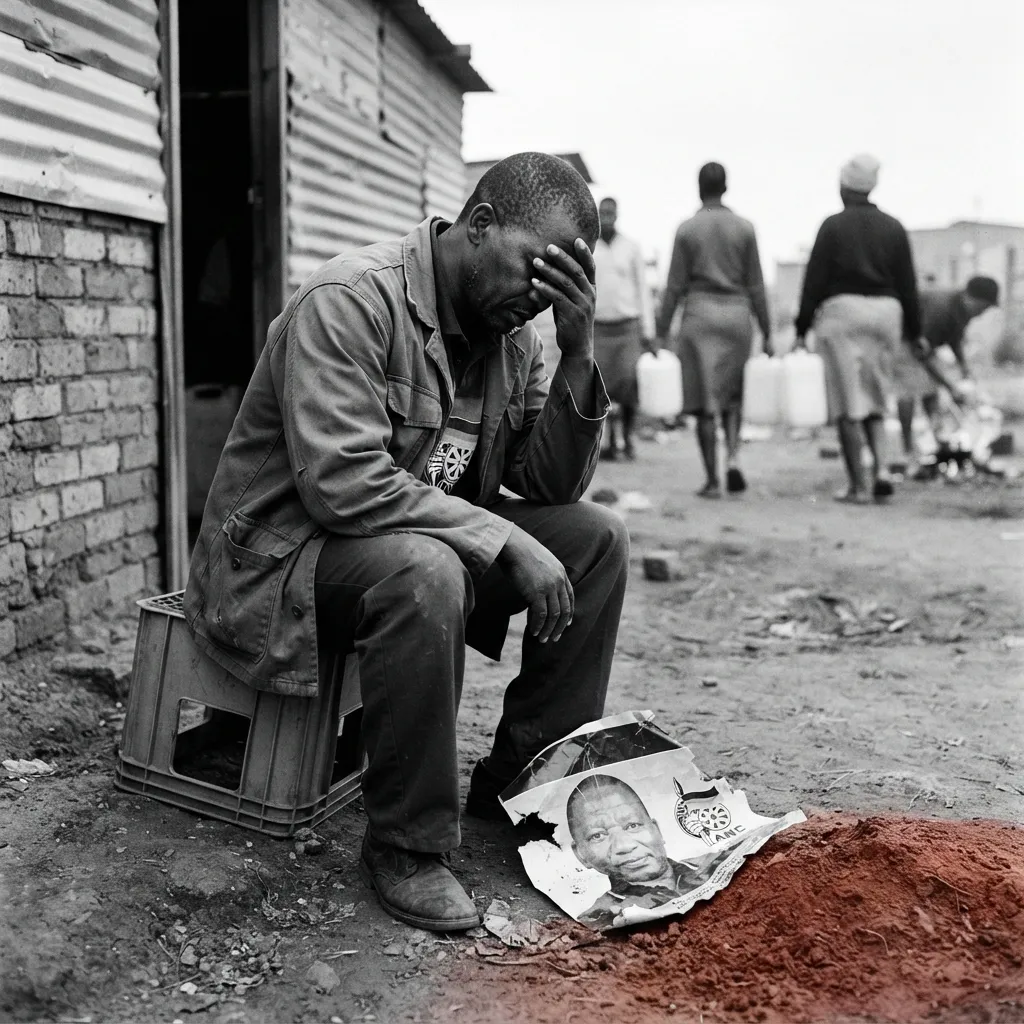

The shockwaves from South Africa’s 2026 local government elections have revealed a sobering reality for the African National Congress. While the party technically remains the largest political force in the country, its collapse to just 32.5 percent of the popular vote marks a historic decline. Once a broad tent that commanded the loyalty of diverse demographics, the ANC has effectively shrunk into a rural stronghold, stripped of its minority supporters and abandoned by large swaths of the Black middle class and working poor. This shift has left the party desperate for coalition partners to maintain any grip on urban centers, while observers note that Black political dominance has eroded far faster than anyone predicted following the end of apartheid.
This implosion was not a sudden accident but rather the result of three distinct eras of failure spanning nearly thirty years. The journey began with a period of relative stability under Thabo Mbeki, whose tenure saw strong GDP growth and high electoral support despite early struggles with the HIV epidemic. However, these gains created an internal friction, fueling a left-wing impatience for faster wealth redistribution that would eventually destabilize the party’s foundation. That instability paved the way for Jacob Zuma’s presidency, characterized as nine devastating years where radical rhetoric served as a smokescreen for systemic state capture. Under Zuma, public enterprises became personal ATMs for the corrupt, draining billions from essential services like electricity and water and hollowing out the civil service.
The hope for recovery arrived with Cyril Ramaphosa on a wave of optimism known as Ramaphoria, yet his leadership evolved into what critics call nine dithering years. Where Zuma committed crimes through action, Ramaphosa failed through omission. His inability to decisively purge corruption or hold former allies accountable allowed figures like Zuma to launch rival movements that cannibalized the ANC’s own voter base. By failing to address crumbling local governance or tackle staggering youth unemployment reaching 63 percent, Ramaphosa presided over a steady bleed of support that turned once certain victories into fragile survival tactics.
Now facing an existential crisis, the ANC finds itself trapped between impossible choices regarding who it trusts to help it govern. The current leadership continues to rely on defensive denials and finger pointing, insisting they are still the biggest party while ignoring their dwindling relevance in city halls across the nation. To avoid total obsolescence, the party must move beyond mere survival and confront deep ideological and moral rot. Whether they choose to align with rivals who highlight their failures or risk reuniting with those who orchestrated state capture remains to be seen, but the era of undisputed hegemony is officially over.