








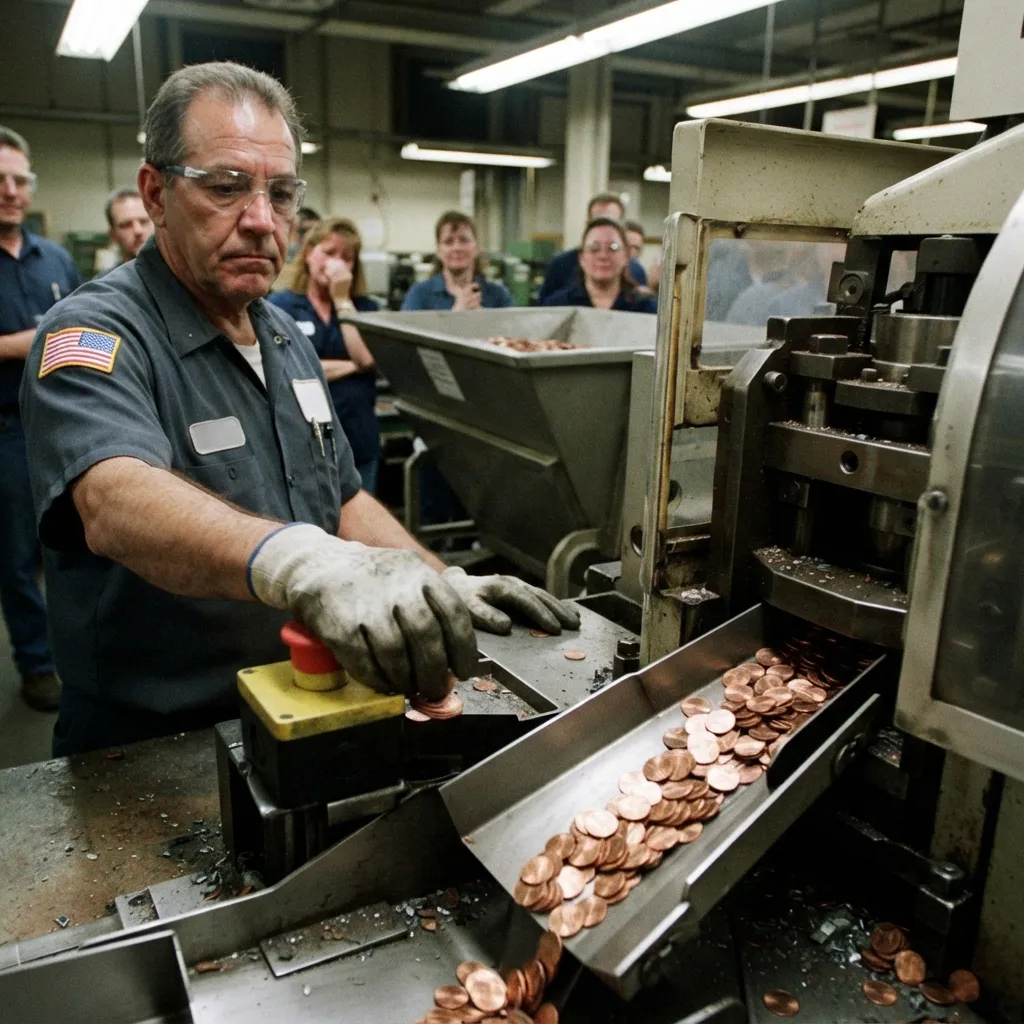

The era of the American penny has officially come to an end after nearly two and a half centuries of production. President Donald Trump signed the bipartisan Common Cents Act on Friday, codifying a decision that removes the one cent piece from the national minting schedule. The move follows months of criticism regarding the inefficiency of the coin’s production, with proponents arguing that continuing to strike a coin worth less than its manufacturing cost was simply unsustainable.
Representative Lisa McClain, who authored the bill, pointed out that it costs roughly four cents to produce a single penny, leading to millions in wasted taxpayer funds each year. By halting mass production, the government expects to save tens of millions annually. While standard circulation coins will vanish from the mint’s presses, collectors can still look forward to limited edition versions released in small quantities for hobbyists and historians.
Despite the cessation of new minting, billions of existing pennies will remain in circulation as legal tender for the foreseeable future. To ease the transition for consumers and retailers, the new law establishes guidelines allowing businesses to round cash transactions to the nearest five cents. Additionally, with the nickel becoming the smallest unit of U.S. currency, the Treasury plans to alter its composition to include zinc rather than expensive copper to further reduce overhead costs.
The retirement marks a historic shift for a coin that evolved significantly since its inception under the Coinage Act of 1792. From Benjamin Franklin’s early sundial designs and images of Lady Liberty to the iconic profile of Abraham Lincoln introduced in 1909, the penny served as a staple of American commerce for generations. Now, as those copper-plated discs slowly filter out of pockets and registers, they leave behind a legacy spanning almost 250 years of economic history.