

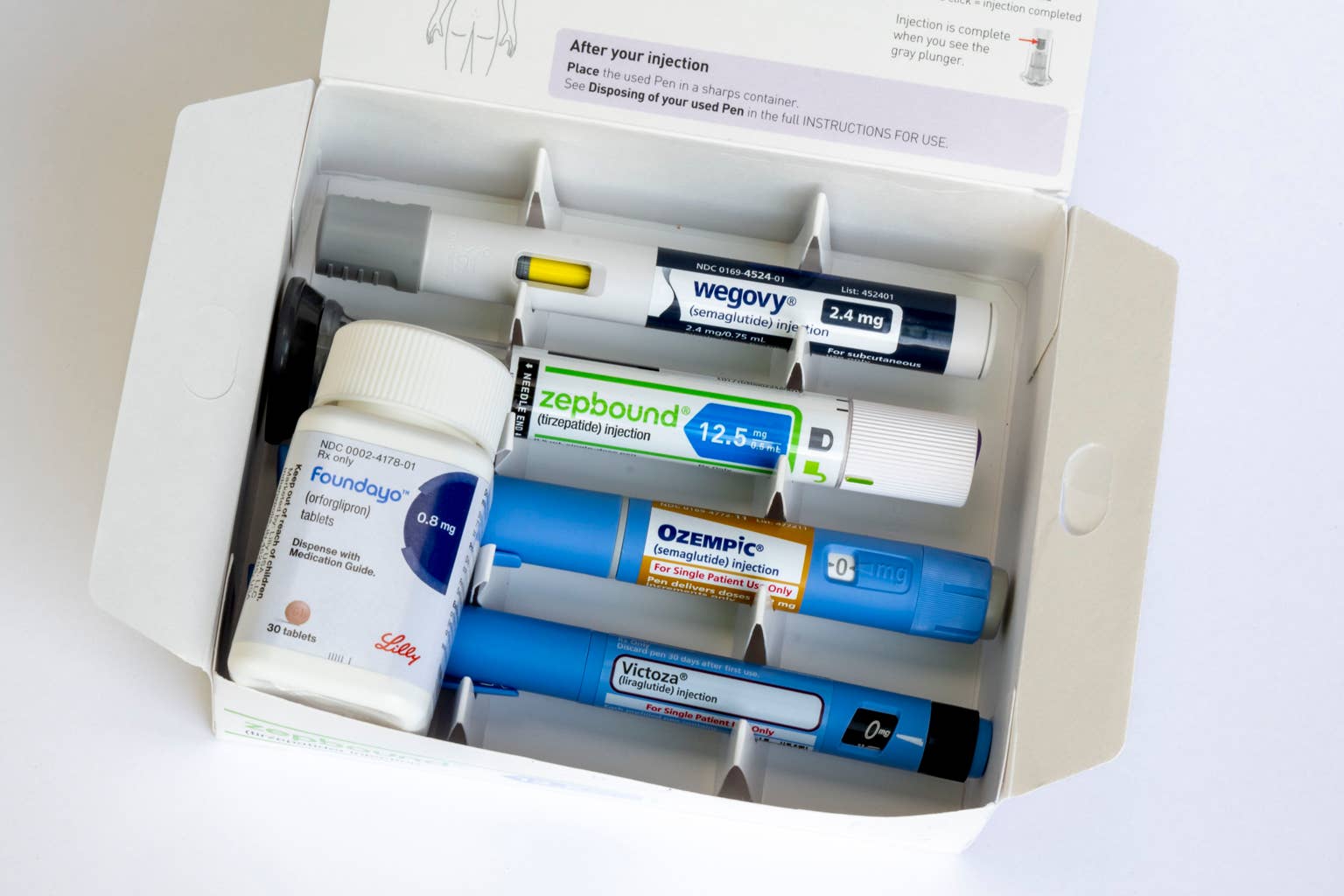

Whenever a new weight-loss drug gains popularity, I think much of the conversation tends to focus on how quickly it works, how much weight people can lose, and the side effects they might experience.
I find it interesting how less obvious risks can get lost in that discussion, especially when they involve something important. Most people wouldn’t think to question whether a weight-loss injection could affect their vision.
That trust is now central to a growing legal fight. According to Bloomberg, hundreds of patients allege that GLP-1 drugs such as Ozempic and Zepbound caused a rare eye condition that led to permanent vision damage, and that Novo Nordisk and Eli Lilly did not adequately warn them.
The U.S. Food and Drug Administration said on Nov. 9 that it will require safety labeling changes because of a “potential increased risk” of non-arteritic anterior ischemic optic neuropathy, or NAION.
A label change is not a finding of cause.
“The data do not establish a cause-and-effect relationship,” Novo said, according to Bloomberg, and Lilly said it will keep defending itself in court. These are allegations that have not been proven.
Also Read: Eli Lilly’s Foundayo pill wins first European approval
What GLP-1 patients allege, and what NAION is
NAION is sometimes called an “eye stroke.” It can cause sudden, painless vision loss, usually in one eye.
Cilette Mitchell, 64, told Bloomberg she started Ozempic in 2024 to lose weight and woke one morning with clouded vision in her right eye. She went to a hospital for tests and told doctors she was taking Ozempic.
Because the drug carried no warning about sudden vision loss at the time, she says they did not take her off it.
More Healthcare/Health:
- Mark Cuban says CVS breakup may not make prescriptions more affordable
- Medicare’s December 7 deadline shapes next year’s health costs
- Suze Orman warns 390,000 seniors on Medicare plan exit
Within a few weeks, she says, she lost sight in her other eye and is now legally blind. She was diagnosed with NAION and is suing Novo. She says she can no longer work as a bank branch manager in San Diego and struggles with her balance.
“If I had been informed, I would have never taken this medication, ever,” she said. Novo declined to comment specifically on her claim.
What the FDA did, and what it did not
The FDA said NAION has been reported with all GLP-1 drugs on the market, and will require updated labeling.
Lilly said in a statement that the FDA’s communication did not reference findings specific to its medicines, and it has already updated prescribing information for its drugs, according to a federal database.
The FDA’s process involves discussing the exact wording with manufacturers and could result in updated labels early next year.
Related: Novo Nordisk CEO opens the door to major move for U.S. investors
The science is unsettled. According to Bloomberg, studies examining a possible link have produced conflicting results.
People with type 2 diabetes already face a higher risk of vision loss and NAION, which makes it hard for researchers to tell whether the drugs cause it or whether some patients are predisposed. Regulators in Europe and the U.K. already require some GLP-1s to carry a warning.
Plaintiffs’ lawyers see the FDA’s move as significant. “The FDA has now recognized that the potential risk of NAION warrants a warning, and whether patients should have received that warning sooner is a central issue in these cases,” said Craig Silverman, who represents patients suing both companies.
The courtroom picture
More than 7,000 lawsuits have been filed in state and federal courts over the past three years, according to court records cited by Bloomberg. Most allege gastrointestinal injuries such as stomach paralysis, gallbladder disease, and pancreatitis.
The cases are consolidated into two multi-district litigations, with roughly 4,300 federal cases before Judge Karen Spencer Marston in Philadelphia and about 2,200 in New Jersey state court.
Related: Obesity titan could shake up Lilly and Novo after astonishing trial
She is deciding which expert opinions are admissible on the gastro claims, and expects to address the NAION cases as soon as mid-2027. Last year she ruled for the companies by excluding two plaintiff experts and requiring a specific radiological test for gastroparesis claims, according to Bloomberg.
Jury bellwether trials could come within two years. Neither side will discuss what a resolution might cost, though mass torts like this can end in settlements reaching billions, such as Johnson & Johnson‘s proposed $5.5 billion talc settlement.
What it means for Novo Nordisk and Eli Lilly
I covered the other side of this race when Novo CEO Mike Doustdar said Novo was “already in production mode” for CagriSema, and when Eli Lilly CEO Dave Ricks said Foundayo had one-third of new oral GLP-1 starts.
Both stories assumed demand keeps rising. Use has nearly quadrupled since 2024, according to Gallup, with as many as 30 million Americans on one of these drugs.
The business scale is large. Lilly’s Q3 revenue was $24.4 billion, up 39%, with Mounjaro up 65% in Q3 to $10.7 billion and Zepbound at $5.4 billion. Foundayo brought in $184 million. Lilly raised full-year guidance to $91 billion to $92 billion. Novo‘s Q3 sales rose 4% at constant exchange rates, with adjusted operating profit up 27%.
For investors, the legal risk is slow and uncertain. For patients, the practical point is simpler. Sudden vision changes on any of these drugs should prompt a call to a doctor straight away. Ask about the new label and any eye-health risk factors, especially if you have diabetes.