







For investors with a spare thousand dollars and a ten year horizon, the temptation is often to chase the flashiest names in artificial intelligence. While many flock toward the software giants or the high profile chip designers who grab the headlines, a smarter strategy may lie further back in the supply chain. By focusing on the companies that provide the essential tools and manufacturing capabilities, investors can profit from the overall expansion of AI without needing to guess which specific processor brand will eventually dominate the market.
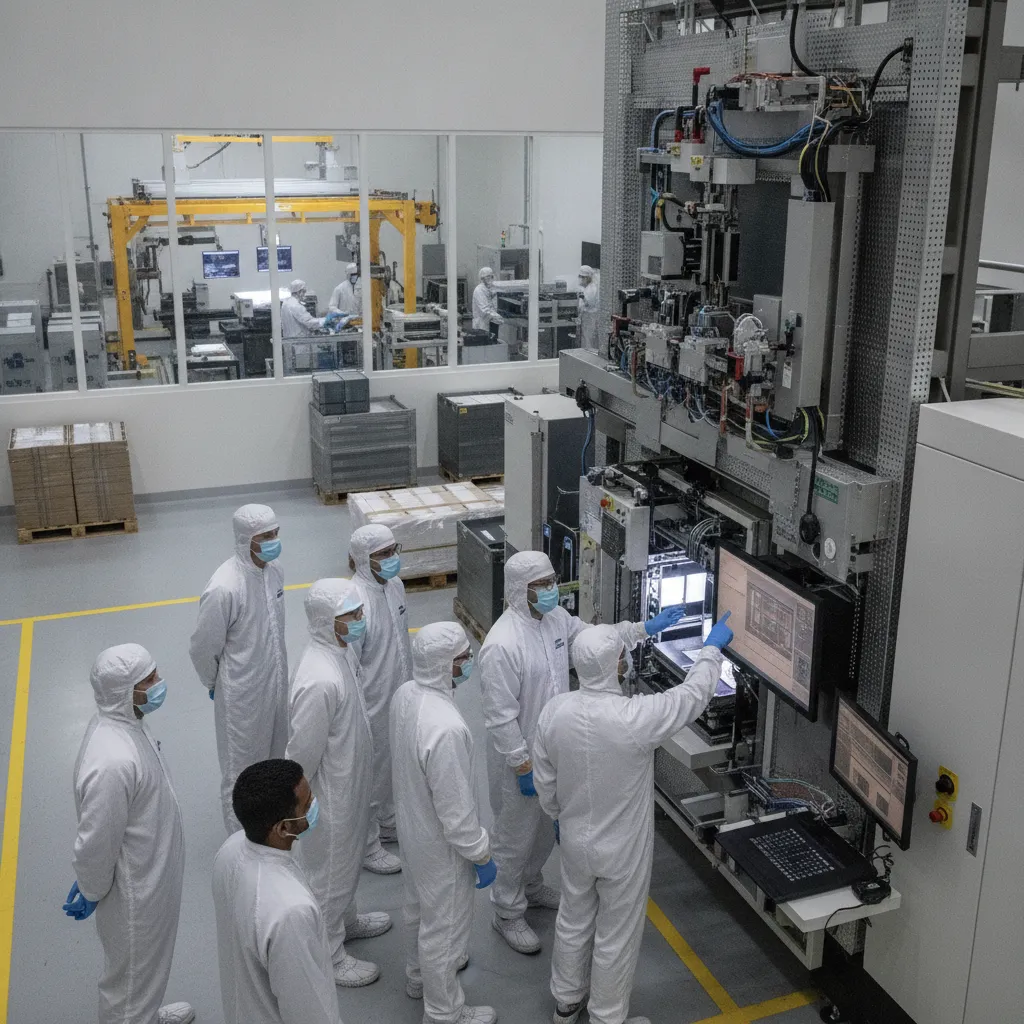
One such cornerstone is ASML, a Dutch powerhouse that holds a virtual monopoly on the machinery required to make modern chips. Their extreme ultraviolet lithography systems are essentially irreplaceable, meaning whether Nvidia or AMD leads the race, they both rely on ASML’s hardware to print microscopic circuits onto silicon. Recent financials underscore this dominance, with record revenues and a backlog of orders stretching as far as 2030. This level of predictability is rare for industrial equipment providers and makes ASML an attractive anchor for any long term portfolio.
Complementing this infrastructure play is Taiwan Semiconductor Manufacturing Company, better known as TSMC. If ASML provides the tools, TSMC provides the factory floor. As the world’s largest dedicated semiconductor foundry, they turn blueprints from tech titans like Apple and Broadcom into physical reality. Their recent quarterly reports show explosive growth driven by high performance computing, proving that as AI demands more power, TSMC becomes more vital. With their move toward ultra advanced two nanometer processes, they remain nearly impossible to displace.
While no investment is entirely without risk or immune to sector volatility, splitting a small investment between these two giants offers a strategic hedge. Rather than betting on a single winner in the AI war, this approach bets on the entire ecosystem’s survival and growth. Using fractional shares allows smaller investors to gain exposure to these heavy hitters, securing a stake in the foundational architecture that will likely define global computing for the next decade.