







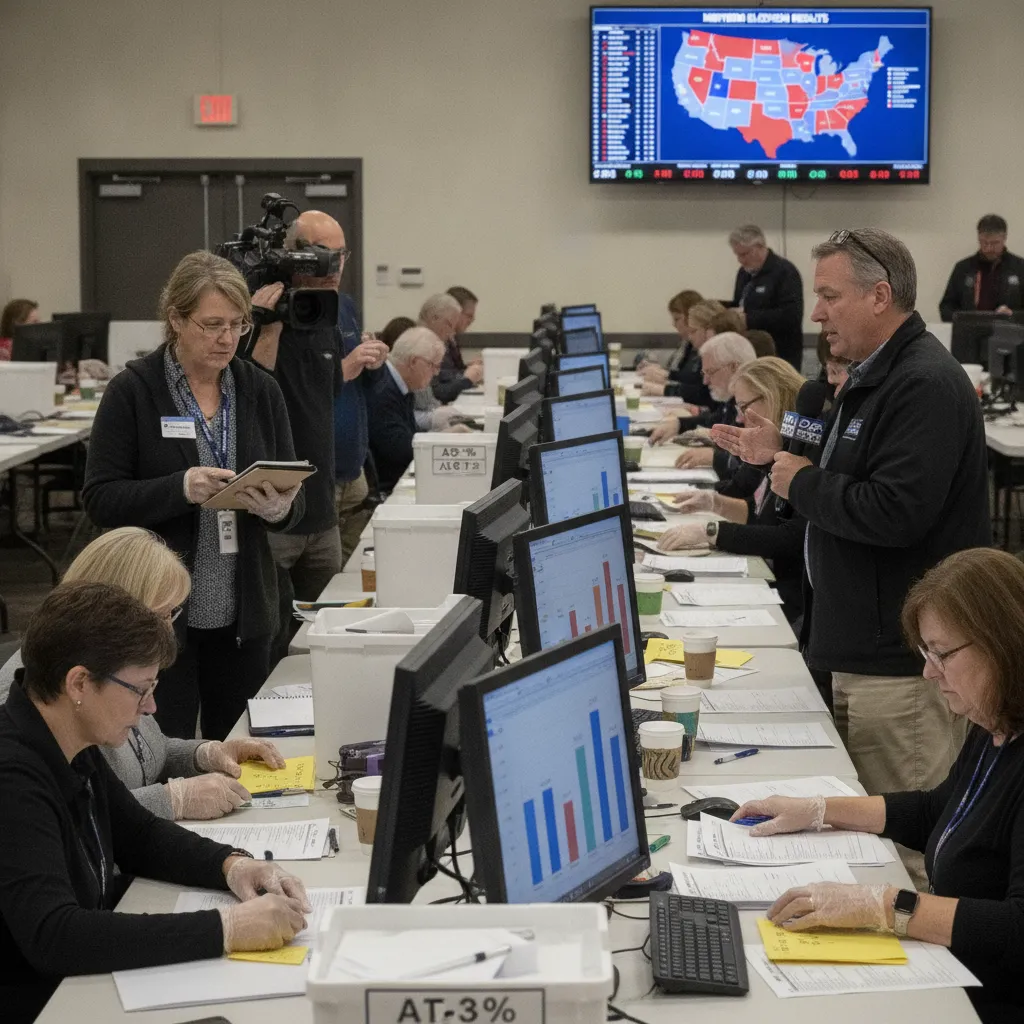

For many voters, the tension of election night comes from wanting immediate answers, but experts warn that going to bed without knowing who won a congressional race is entirely normal. It is common for a candidate who trailed early in the evening to pull ahead by the following morning as different batches of votes are processed. While these shifts can trigger accusations of fraud or claims of suspicious ballot dumps from political figures and social media users, officials emphasize that these patterns are simply part of the legal counting process.
The speed of reporting depends largely on state laws rather than efficiency or integrity. For instance, while Florida often completes its unofficial counts quickly, other states have different requirements for verifying signatures and processing mail-in ballots. Experts note that what feels slow is often just the time necessary for media outlets to gather enough data to confidently project a winner based on the margin of victory. In highly competitive Senate races across states like Michigan, Texas, and Alaska, it may take several days or even weeks to determine a victor, especially if a recount is triggered.
Different voting methods also create staggered timelines. Mail-in ballots require significant manual verification, and some states allow ballots postmarked by Election Day to arrive well after the polls close. California serves as a prime example where results may not be fully reported for nearly two weeks due to these policies. Similarly, high volumes of last-minute absentee ballots in major hubs like Detroit can extend the timeline into the early hours of the morning or beyond, regardless of any perceived anomalies in how those ballots are transported.
Ultimately, no state is legally required to finalize its count on election night. Official certification usually happens weeks later once every valid vote has been tabulated according to legislative mandates. To help ensure a smoother process, officials recommend that voters utilize secure drop boxes or mail their ballots at least one week before the deadline to reduce the burden on election workers during the critical window following the close of polls.