







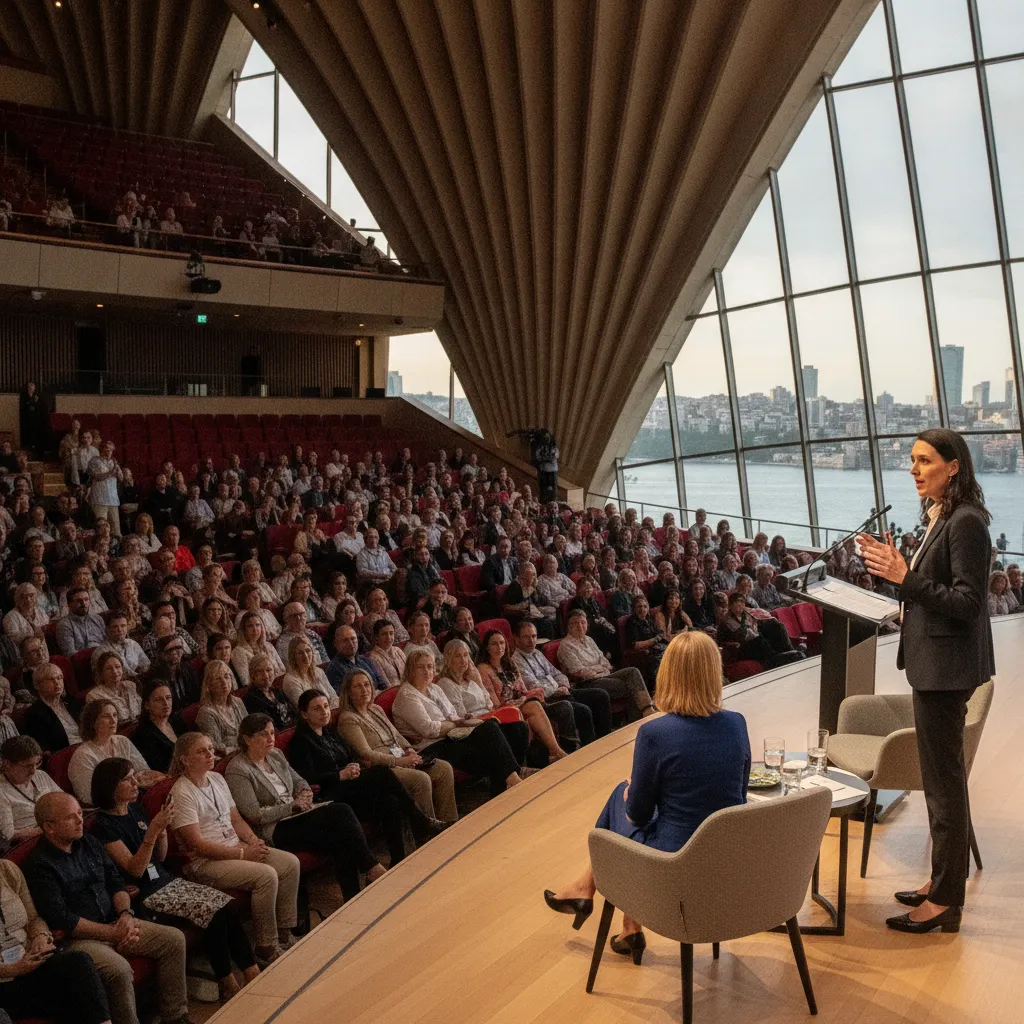

Jacinda Ardern returned to the spotlight on Sunday, delivering a poignant critique of modern governance from the stage of the Sydney Opera House. Now residing in Australia and taking up a role as a lecturer and mentor at the University of Sydney, the former New Zealand prime minister joined author Anna Funder for a wide ranging conversation focused on how societies can disagree without becoming irrevocably divided. Ardern argued that current political strategies are often exacerbating societal polarization rather than solving it, calling on leaders to abandon binary thinking and avoid the language of violence.
According to Ardern, the root of today’s instability lies in a global sense of financial insecurity triggered by globalization over several decades. She suggested that instead of addressing these material anxieties, many politicians opted for easy targets, citing events like Brexit as examples where leaders pointed toward scapegoats rather than solutions. This approach, she noted, created a vacuum that allowed populist figures like Donald Trump to rise by leveraging grievance and mistrust against established institutions.
The discussion also touched upon the dangerous evolution of digital communication. Reflecting on her own early optimism regarding social media when she entered parliament in 2008, Ardern admitted she was naive about its potential for manipulation. Her perspective shifted permanently following the 2019 Christchurch mosque shootings, an event she described as her awakening to the weaponization of platforms like YouTube and Facebook to incite hatred and spread radicalized ideologies.
Closing her remarks with a call for systemic change, Ardern asserted that the world is currently facing a crisis of leadership alongside its crisis of trust. She urged politicians to stop weaponizing blame and instead lead with empathy and humility. By focusing on rebuilding actual financial security for citizens rather than fueling cultural wars, Ardern believes leaders can begin to mend the fractured relationship between governments and the people they serve.