
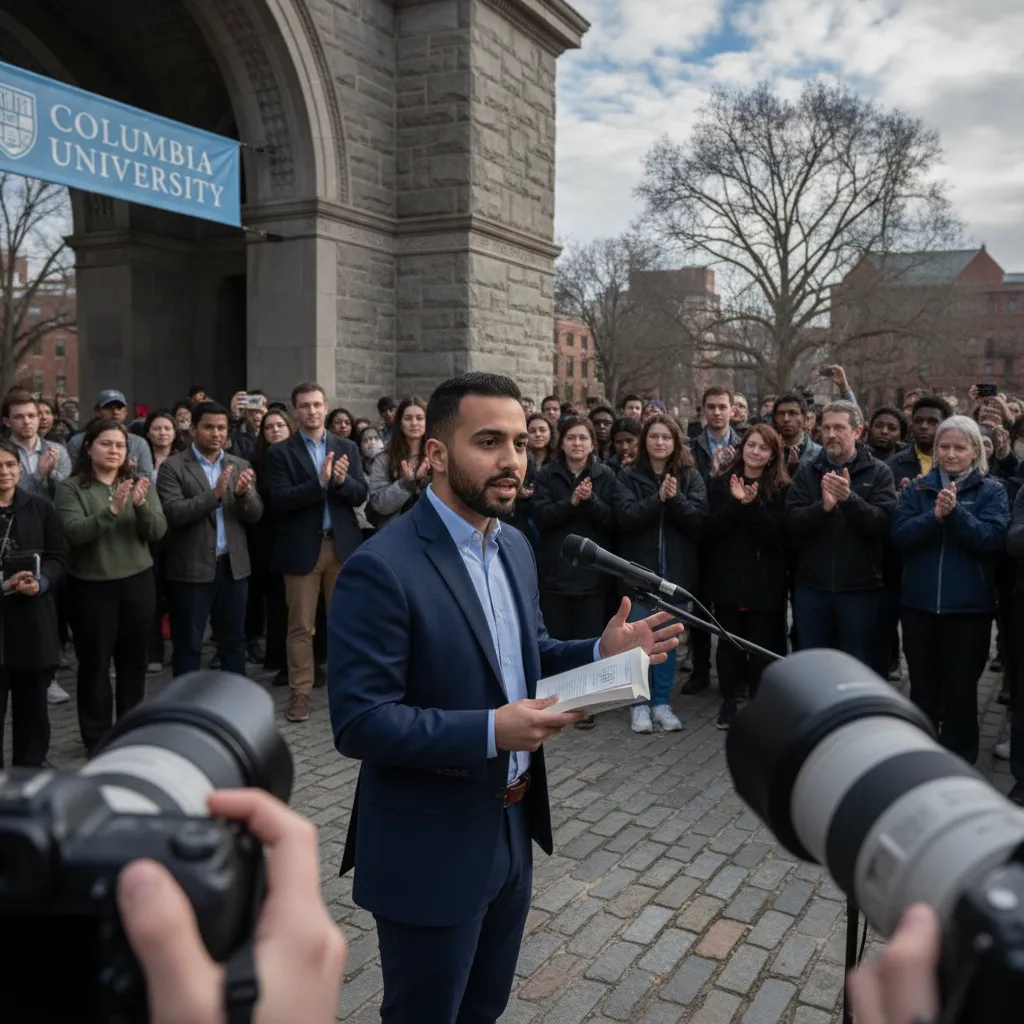

Mahmoud Khalil stepped back onto the grounds of Columbia University this Tuesday for the first time since his high profile arrest, returning not as a protester but as an author. The thirty one year old graduate spoke to a crowd of roughly one hundred people about his new memoir, No Land to Stand On: Notes from Detention, which chronicles his experience being detained by immigration authorities. For Khalil, who emerged as a central figure in the wave of pro Palestinian campus movements that gripped the nation in 2024, the visit felt like a victory despite the lingering tensions surrounding his presence on campus.
During his talk and subsequent interviews, Khalil argued that student activism has fundamentally altered the landscape of American politics. He believes that grassroots advocacy has forced the general public to view Palestinians as equals and has paved the way for a new wave of progressive leaders to enter government. Pointing toward figures like New York City Mayor Zohran Mamdani and senate candidate Dr. Abdul El Sayed, Khalil suggested that the courage displayed on campuses has translated into tangible electoral gains for those questioning traditional U.S. policy regarding Israel.
However, the reunion was far from seamless. Khalil used the occasion to renew his criticisms of Columbia’s administration, accusing university leadership of attempting to silence Palestinian voices through brutality and repression during previous demonstrations. While some Jewish groups voiced opposition to his return via social media, Columbia officials defended the event as part of their commitment to academic freedom and open inquiry, clarifying that inviting a guest speaker does not constitute an official endorsement of their specific viewpoints.
Beyond the political discourse, Khalil’s return highlights a deeply personal struggle for stability. Despite holding permanent residency, he spent three months in immigration custody without criminal charges during a federal crackdown on foreign activists. Though he was eventually released in mid 2025, he remains locked in a legal battle against efforts by the Trump administration to deport him. Now focusing on regaining a sense of normalcy for himself and his family, Khalil insists that his struggle is ultimately about more than just residency; it is about protecting the fundamental right of all individuals within the United States to speak their minds freely.