





Most drivers will never see a mattress fall off a truck on the highway. A self-driving car has to be ready for it anyway, and it cannot practice on the real thing.
That problem sits at the center of Rivian Automotive’s (RIVN) newest deal. The electric vehicle maker just bought a small startup whose technology can rehearse those rare moments before they happen.
The purchase itself looks modest. The bigger story is the self-driving bill it feeds, and that bill keeps growing.
Also read: Rivian sends safety message to thousands of drivers
Rivian bought a way to rehearse the rare moments
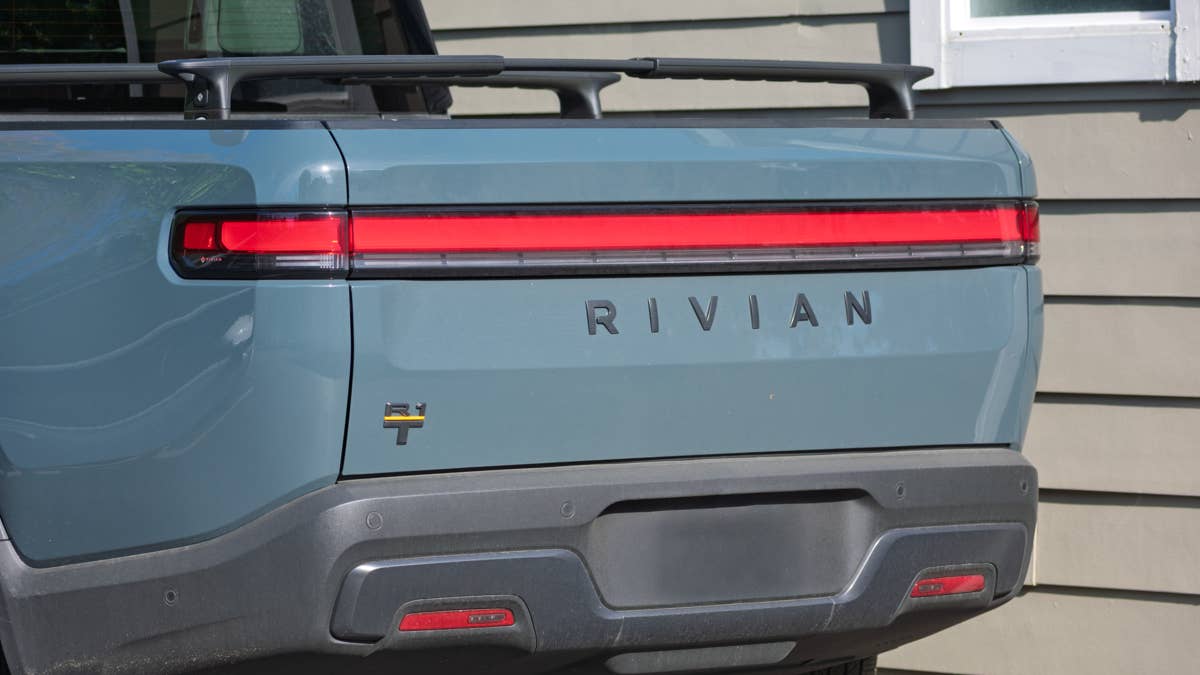
On Thursday, October 22, 2026, Rivian announced that it acquired Third Dimension AI. The startup turns real-world data into detailed 3D scenes that engineers can control. Terms were not disclosed.
The 15-person team, mostly based in the U.K., first built its technology to speed up video game development, TechCrunch reported. CEO Tolga Kart previously spent years as a senior director on Call of Duty.
Rivian already collects more than 400,000 driving sequences a day from owners who share camera data, autonomy chief James Philbin told TechCrunch. The new tool lets engineers move cameras, shift other road users or change the weather inside those real scenes.
That matters because rare moments are slow to capture on public roads, yet testing depends on them. Before any release, Philbin said, the question is, “Is the system good to ship?”
A simulator that misreads reality gives the wrong answer, and a wrong answer on public roads is costly. This is the unglamorous side of autonomy, and I like that Rivian is spending here.
The real cost of self-driving is computing power
However, the real expense is not the purchase price. It is the computing power needed to train and test these systems.
Rivian disclosed in March that it no longer expected positive adjusted EBITDA in 2027, citing heavier autonomy spending. That metric is a rough gauge of operating profit.
During the earnings call on Thursday, July 30, 2026, CFO Claire McDonough said research spending would climb in the second half. In response to TD Cowen analyst Itay Michaeli, she tied it to “GPU sourcing for our autonomy training.”
GPUs are the chips that train AI systems. Here is the overlooked catch: simulation can make training data richer, but every synthetic scene still runs on those same chips.
The timing adds pressure. McDonough leaves at the end of October, right after Rivian reports results. Finance vice president Derek Mulvey will step in as interim CFO.
Rivian’s best business may be the tech, not the trucks
The bigger question is which part of Rivian already turns a profit before overhead costs. In the second quarter, its car business still posted a gross loss.
Its software and services segment, meanwhile, produced $215 million in gross profit, the company said. Most of that revenue came from its joint venture with Volkswagen Group (VWAGY), which pays Rivian for electrical architecture and software work.
That reframes the deal. Better simulation feeds the part of Rivian that partners already pay for, which is its technology.
Uber Technologies (UBER) is the next test of that idea. It agreed to invest up to $1.25 billion through 2031, but most of it depends on autonomy milestones.
For everyday drivers, the payoff is more personal. CEO RJ Scaringe answered Wolfe Research analyst Shreyas Patil in July with a vivid picture. A fully self-driving Rivian, he said, could drop you at the airport, pick up your kids and do the grocery run.
He targets that capability for 2028. Even so, Rivian’s software revenue relies heavily on a single partner, and the company has not disclosed how much its autonomy subscription earns.
More Automotive:
- ‘Too late’ for Europe, Ford CEO warns as Chinese cars eye U.S.
- Trump’s latest gift to automakers has major consequences
- Rivian sends safety message to thousands of drivers
Rivian’s next report will test Wall Street’s patience
Investors are not giving Rivian much credit yet. Shares slipped on Friday, October 23, 2026, the day after the announcement, and touched a new 52-week low.
Deliveries are not the problem. Rivian’s third-quarter deliveries hit a record and beat estimates, Reuters reported, as the cheaper R2 SUV ramped up. The worry is the cash behind every vehicle and every line of code.
Wall Street remains split. The 25 analysts tracked by StockAnalysis rate the stock a consensus Hold, with an average price target of $19. The latest calls:
- Hold, $14 target: Barclays analyst Dan Levy, October 19, 2026
- Hold, $16 target: RBC Capital analyst Tom Narayan, October 9, 2026
- Hold, $17 target: UBS analyst Joseph Spak, October 7, 2026
- Buy, $20 target: Yorkville Ives analyst Daniel Ives, initiated October 7, 2026
- Sell, $14 target: Morgan Stanley analyst Andrew Percoco, October 3, 2026
Valuation tells the same story. Rivian trades at roughly 2.3 times the revenue analysts expect this year, based on StockAnalysis data.
At that level, investors are mostly paying for vehicle sales, not autonomy. I am not convinced the market is wrong to wait, since a simulator proves itself only when customers trust the software.
The next checkpoint comes on Thursday, October 29, 2026, when Rivian reports third-quarter results. I will be watching R2 gross profit, which management expects to turn positive by year-end.
Research spending matters just as much, because that is where the autonomy bill shows up first. For Rivian, the most valuable input is shifting from steel and batteries to driving data and the chips that process it. Now it has to prove it can afford both.