

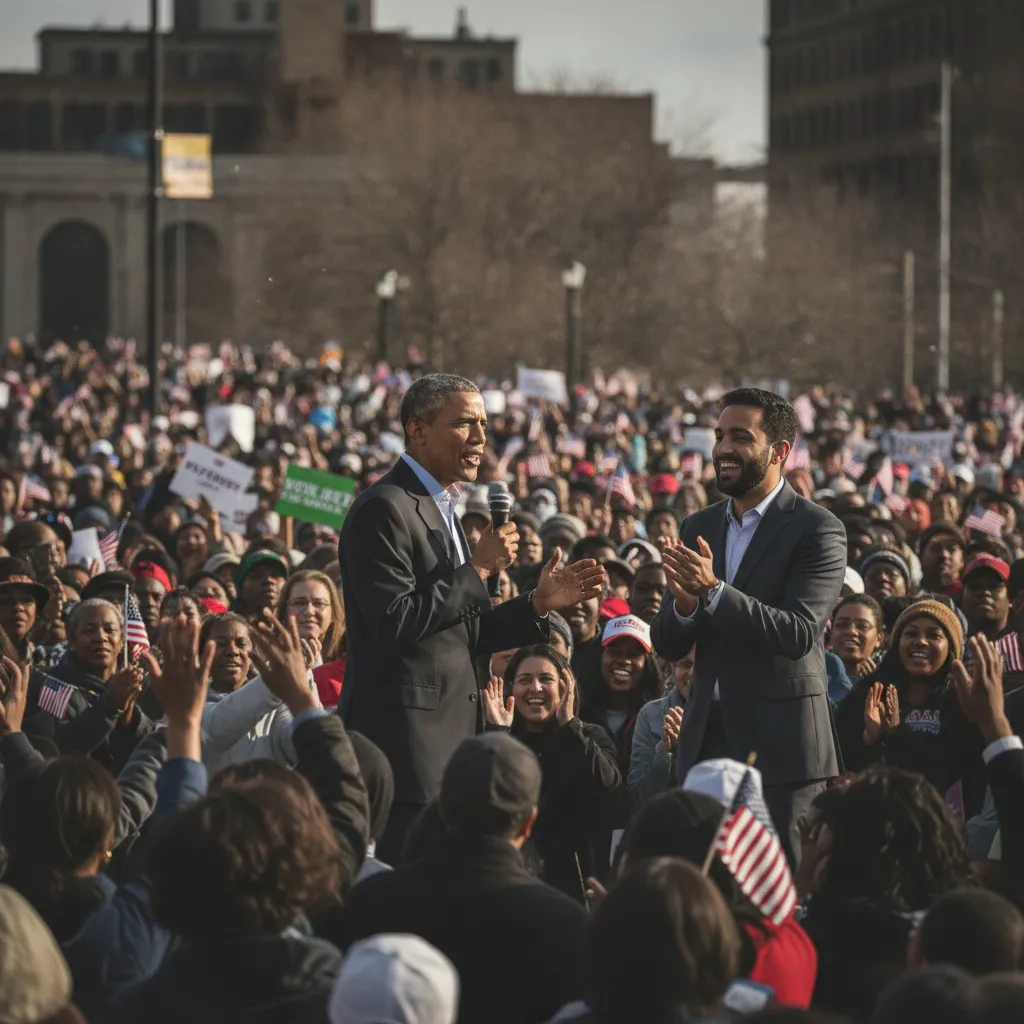

Former President Barack Obama descended on Detroit this Saturday, bringing his signature oratorical style to a high stakes rally for Democratic Senate nominee Abdul El Sayed. With Election Day less than two weeks away, the visit served as a strategic push to energize Black voters in a city that often determines the outcome of statewide contests. Obama framed El Sayed as a champion for tangible change, arguing that policies like expanding the Affordable Care Act and removing corporate money from politics are common sense goals rather than radical ideas.
The atmosphere turned sharp as Obama took aim at President Donald Trump and congressional Republicans, accusing them of delivering broken promises throughout their 2024 campaigns. He specifically pointed to the economic fallout from tariffs and the handling of the Iran War as issues that have disproportionately harmed Michigan residents. Between policy critiques, Obama peppered his speech with humor, mocking Trump’s obsession with White House renovations and suggesting the current president would be better suited for a home improvement show on HGTV than leading the nation.
For El Sayed, an epidemiologist and former health director for Detroit and Wayne County, the endorsement comes at a critical juncture. While polling generally shows him holding a significant lead among Black voters over Republican opponent Mike Rogers, margins matter in such a narrow race. El Sayed used his time on stage to contrast his own background and Obama’s record of diplomatic containment against what he described as Trump’s chaotic approach to foreign policy and trade. To further bridge gaps with local voters, Obama played up El Sayed’s deep roots in the state, jokingly referring to him as a jock due to his history in varsity sports.
Despite the star power of the rally, some local voices suggest that celebrity endorsements cannot entirely erase deeper social frictions. Some Detroit leaders noted that historical tensions between Arab American and Black communities have created hurdles for El Sayed since the primary season. Even so, voters encountered at nearby polling stations expressed a renewed urgency to participate this cycle, citing a volatile economy and political instability in Washington as reasons they could no longer afford to stay home on Election Day.