








Most of us only think about coins when we’re digging for quarters. A smaller group of Americans will happily pay more than face value for them.
That second group keeps the U.S. Mint in business. Besides striking the change in your pocket, the Mint sells collector coins, proof sets and commemoratives directly to the public, and it runs without an annual appropriation from Congress, according to its 2025 annual report.
In fiscal 2025, which ended Sept. 30, 2025, those collector sales, which the Mint calls numismatic revenue, came to $490.1 million, up from $469.0 million a year earlier. The number of collector units sold fell to about 2.9 million from 3.6 million.
Then U.S. Treasurer Brandon Beach set a goal that looked unrealistic on paper: more than double the Mint’s annual sales.
Doubling meant finding roughly another half-billion dollars from collectors in one year, at a time when the number of items sold was shrinking.
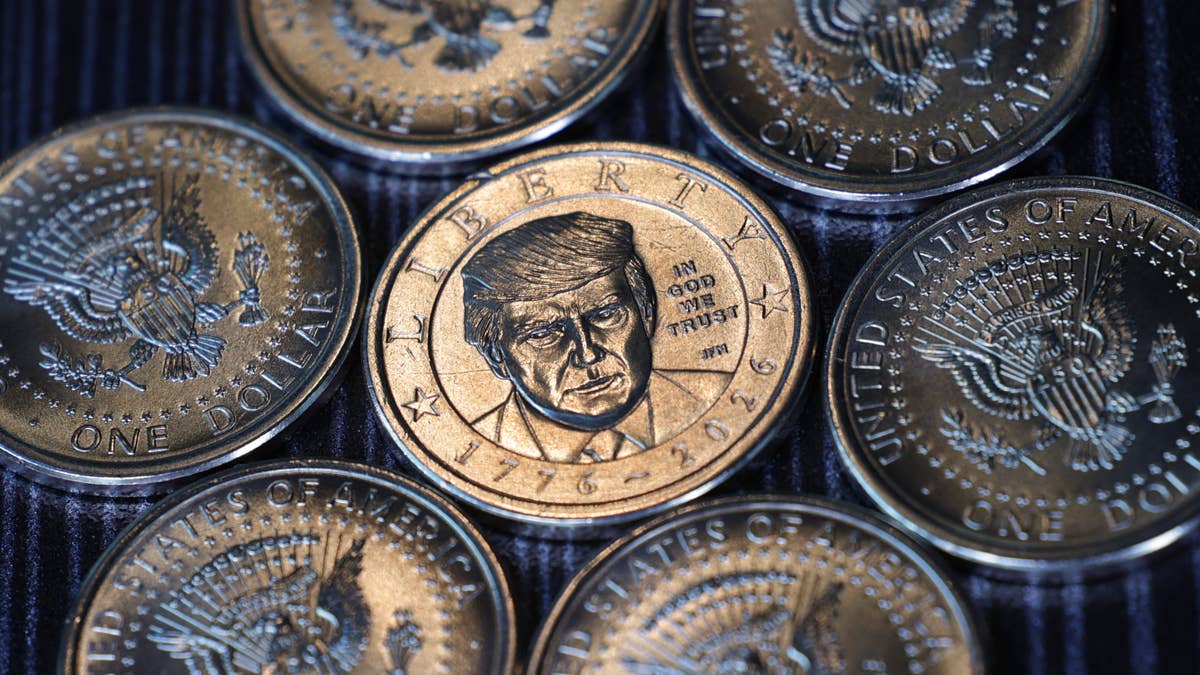
The Mint cleared it. The bureau “topped $1 billion in FY 2026 sales,” a 20-plus-year high, with strong demand for the President Donald J. Trump $1 coin, the Treasury Department said in an Oct. 15 post on X.
How Treasury says the U.S. Mint hit $1 billion
Treasury Secretary Scott Bessent congratulated Mint Director Paul Hollis and his team, saying Beach’s “ambitious challenge” had turned into “a historic achievement in FY 2026,” in a post on X.
Treasury tied the record to America’s 250th anniversary, which gave the Mint a year of special designs and commemorative products to sell. It also said the result came at no cost to taxpayers. Fiscal 2026 ran from Oct. 1, 2025, through Sept. 30, 2026, so the record covers a full year of anniversary programs.
Read more: Bessent drops a bombshell on Iran oil, dollar
One caveat before you take the headline at face value: The Treasury didn’t say which revenue lines make up the $1 billion.
By my analysis, the “more than double” claim only works for collector sales, since the Mint’s total revenue was already $2.62 billion in fiscal 2025 once bullion and circulating coins are counted.
The fiscal 2025 report also shows how volatile the other lines are. Bullion revenue, from gold and silver investment coins, fell to $1.59 billion that year from $2.36 billion in fiscal 2024.
There is another clue in the collector numbers. Units sold dropped about 19 percent in fiscal 2025 while revenue rose, which works out to roughly $169 per item sold versus about $131 a year earlier. The Mint was already selling fewer, pricier products before the 250th-anniversary push began.
The Trump dollar’s real share of the record
The Trump coin is the headline grabber, but the calendar limits how much it could have contributed. Sales began on Sept. 2, 2026, Fox Business reported, which left four weeks before the fiscal year closed on Sept. 30.
The first release was capped at 150,000 rolls and 50,000 bags, according to Newsweek. At $61 a roll and $154.50 a bag, a complete sellout would bring in about $16.9 million.
That is roughly 1.7 percent of $1 billion. I’m not doubting the demand, but if the $1 billion is collector sales, the Trump coin alone can’t explain how the Mint added more than $500 million in a single year.
More Treasury:
- Treasury strategy is becoming Wall Street’s biggest story
- Can 6% Treasury yields coexist with higher stocks? This FedWatch advisor thinks so
- Jim Cramer’s 3-part bull case ran into a 5% Treasury
A likelier explanation is the full slate of 250th-anniversary products, with precious-metals interest running high as spot gold sat near $4,185 an ounce on Oct. 16, according to Benzinga. The Mint’s fiscal 2026 annual report should settle it.
The coin also arrived with baggage. Living presidents are generally kept off U.S. currency, and the administration points to the Circulating Collectible Coin Redesign Act of 2020 as its authority, ABC News reported. Members of the Citizens Coinage Advisory Committee say the design was never reviewed, while Treasury says the committee passed on the chance.
Even the circulation status was muddy at launch. The Mint told buyers to check their pocket change, while its product page said the coins had never been placed into circulation, Fox Business noted.
Should you pay $61 for $25 in presidential coins?
If you’re thinking about buying, start with the markup. Here is what the record behind the coin shows:
- A 25-coin roll costs $61, which is $36 above face value, and a 100-coin bag costs $154.50, or $54.50 above face, Newsweek reported.
- By my math, that is about a 144 percent premium on a roll and a 55 percent premium on a bag.
- The coins are made of manganese brass, not gold, and 250,000 of them carry a special “July 4th” mark mixed randomly into rolls and bags, according to ABC News.
- The last living president on a circulating U.S. coin was Calvin Coolidge in 1926, and about 860,000 of roughly one million of those half-dollars were returned and melted because demand was weak, ABC News reported.
The Coolidge history is the warning label. Political and commemorative coins can sell out fast and still trade near face value years later if supply keeps coming.
More supply is coming. The coins go back on sale from the Mint on Nov. 5, and Beach said in a Treasury video that they will be “in the banks next month,” Newsweek reported.
In the same TikTok clip, he urged viewers to spend rolls at their favorite liberal coffee shop. If they reach bank teller windows at face value, paying $2.44 a coin today looks expensive.
I’d treat the Trump dollar as a souvenir, not an investment. If you want one for your kid or your mantel, the $154.50 bag is the cheaper route per coin, and the special July 4 coins are a lottery ticket, not a plan.
If you already bought at launch, there’s no reason to panic-sell, but don’t count those coins toward your savings either.
What the collector boom means for taxpayers
“At no cost to taxpayers” is broadly accurate. The Mint funds its operations through a revolving account called the Public Enterprise Fund and hasn’t needed an annual appropriation since fiscal 1996, according to its annual report.
The bigger question is how much comes back to the Treasury. Seigniorage, the profit on circulating coins, fell to $34.2 million in fiscal 2025 from $99.5 million a year earlier, and the Mint made no transfer to the Treasury’s general fund that year, the report shows.
A $1 billion collector year gives the Mint room to change that. Whether it does will show up in the fiscal 2026 report, and that is the number taxpayers should watch next.
Related: Gold just passed a milestone that should worry Washington