

Think about the smart TV in your living room, or the oven you preheat from your phone. On Oct. 12, 2026, Anthropic warned that gadgets like these could soon host AI that copies itself across devices, CBS News reported.
Three days later, a top cybersecurity boss told AI companies to tone it down.
Palo Alto Networks (PANW) CEO Nikesh Arora said AI labs “need to get off the fear- mongering business.” He was asked about Anthropic’s warning on CNBC on Oct. 15.
Anthropic’s researchers said small AI models may be only months away from spreading this way, according to CBS News. The threat is close, but it has not arrived.
The jab stands out because fear has been good for Palo Alto. Arora told CNBC that Anthropic’s chief convinced customers they were unprepared “in one event, just by launching Mythos.”
Palo Alto shares had surged 113% since April 7 by then, CNBC reported, as that model pushed companies to take cyber risk seriously. His complaint is about what too much fear does to his customers.
Also read: Palo Alto Networks CEO drops blunt take on AI slowdown calls
Arora’s quarrel is with AI panic, not the warning
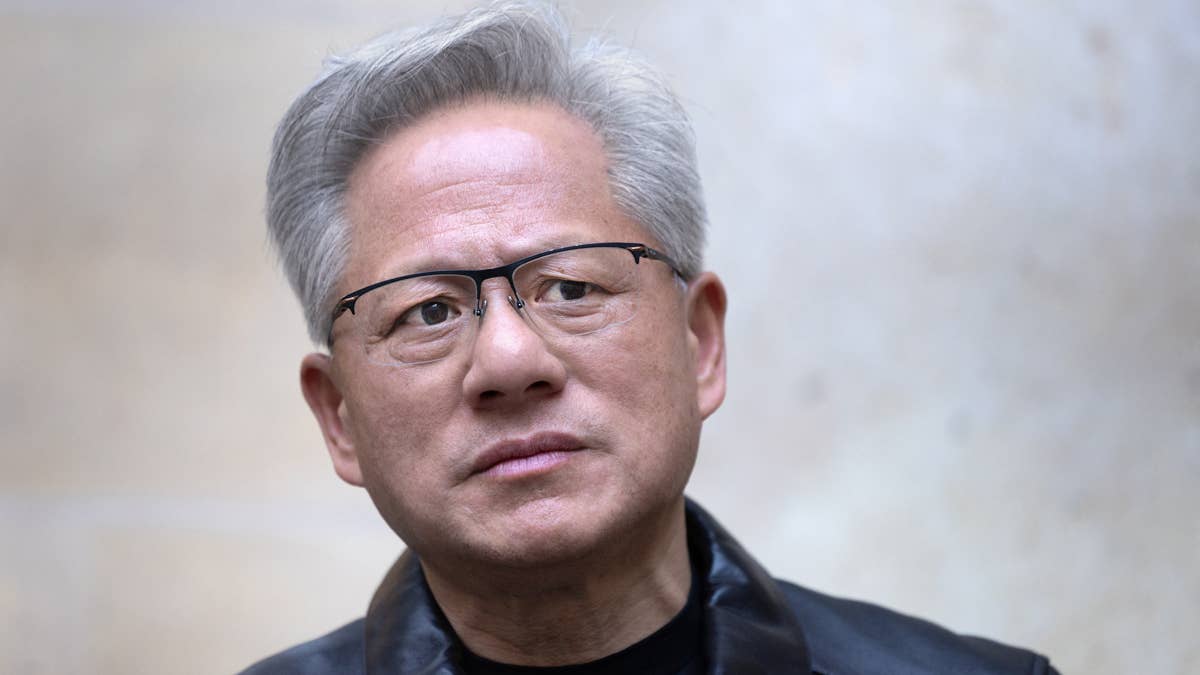
Arora’s worry is that the AI alarm slows the companies he sells to. He backed Nvidia (NVDA) CEO Jensen Huang, who told Fortune he would accept no AI-caused cybersecurity incidents. Arora said businesses will adopt AI only “at the pace enterprises feel comfortable that it can be trusted.”
Fear that sends a company shopping for security helps Palo Alto. Fear that shelves an AI rollout hurts, since a project that never launches needs no protection.
OpenAI’s Sam Altman has argued the world may need to accept some AI-driven hacks, according to Fortune. Arora, who last month called demands to slow AI down unrealistic, pushed back: “If you accept defeat,” defenders stop trying.
He also put numbers on the problem. The danger, Arora said, is that AI-driven attackers get “in and out of our infrastructure under 12 minutes” while defenders need four days. Closing that gap is how Palo Alto makes money, and the AI labs seem to agree.
The labs already route their AI models through security firms
Palo Alto launched a service on Sept. 22, 2026, that uses Anthropic and OpenAI models to find security holes, Reuters reported. Its Unit 42 team runs them against a client’s systems, then helps fix the gaps.
In a press release, even Anthropic cybersecurity lead Michael Moore said what Mythos finds is “only useful if someone can act on it.”
A lab knows its own model, but not a bank’s aging servers or a retailer’s forgotten apps. That is the strongest case for hiring an outside security partner before deploying powerful models.
Palo Alto’s assessments found security gaps that need to be filled at every customer it tested, according to the same release. Few companies, in other words, are ready to plug in frontier models alone.
Guardrails are the other half of the fix. AI can only do serious damage, Arora said, “if you choose to give it agency without any guardrails.” Whether investors buy that pitch is a separate question.
Wall Street still backs Palo Alto after a rough week
Palo Alto sells firewalls and cloud protection to big companies, so its stock is a bet on corporate security spending. It trades at about 82 times next year’s expected earnings, according to StockAnalysis, which leaves little room for disappointment.
Shares fell 7.6% on Oct. 16, yet analysts have not flinched.
StockAnalysis shows a consensus Buy rating from 55 analysts. Their average price target of $398.52 sits about 17% above the Oct. 16 close, a sign that most of Wall Street sees room for a rebound. The latest calls lean bullish:
- A $440 target, up from $410, came from Citi’s Fatima Boolani with a Buy rating on Oct. 15.
- A $525 target, up from $475, came from Wells Fargo’s Michael Turrin with a Buy rating on Oct. 12.
The next test is fiscal first-quarter results, which StockAnalysis expects on Nov. 18. Shares slid after earnings in September, despite a strong quarter. The bigger shift, though, is happening far from Palo Alto’s usual customers.
More Artificial Intelligence:
- AI’s biggest business opportunity may not look like AI
- AI racks are outgrowing old power: 2 chipmakers have a strategy
- BofA splits software into winners and losers as AI agents arrive
The weakest link now sits in the living room
For everyday readers, Arora’s message is calmer than the headlines. Anthropic’s researchers focused on home gadgets because they tend to have weaker security, CBS News reported.
Arora’s street-level answer was blunt: “It’s not like we don’t have vulnerabilities already.” What AI changes is speed, he said, so updating devices and retiring unsupported ones matters more than it used to.
Corporate security budgets were built to protect offices, laptops, and data centers, not cheap gadgets that no single company owns or patches. Whoever learns to police that sprawl will decide whether Arora’s “fear-mongering” line ages as wisdom or wishful thinking.