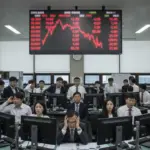
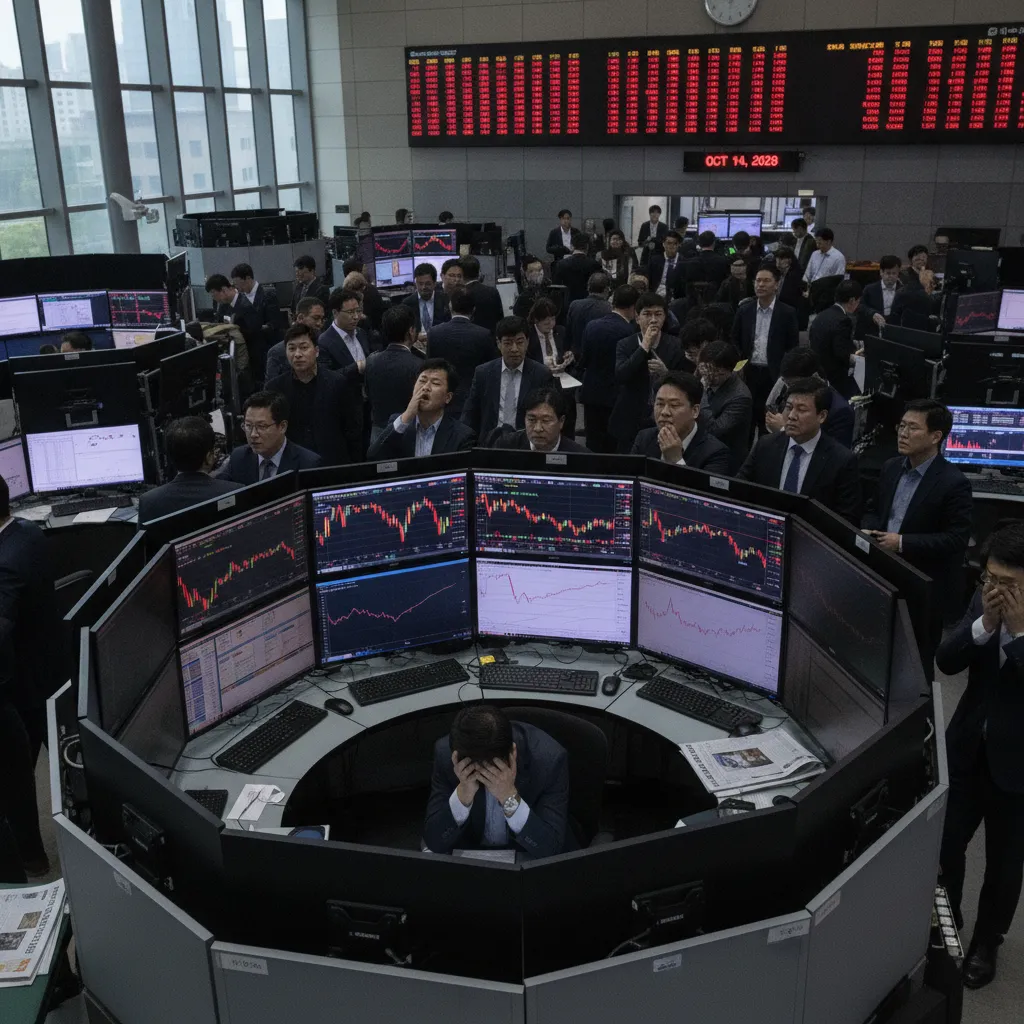
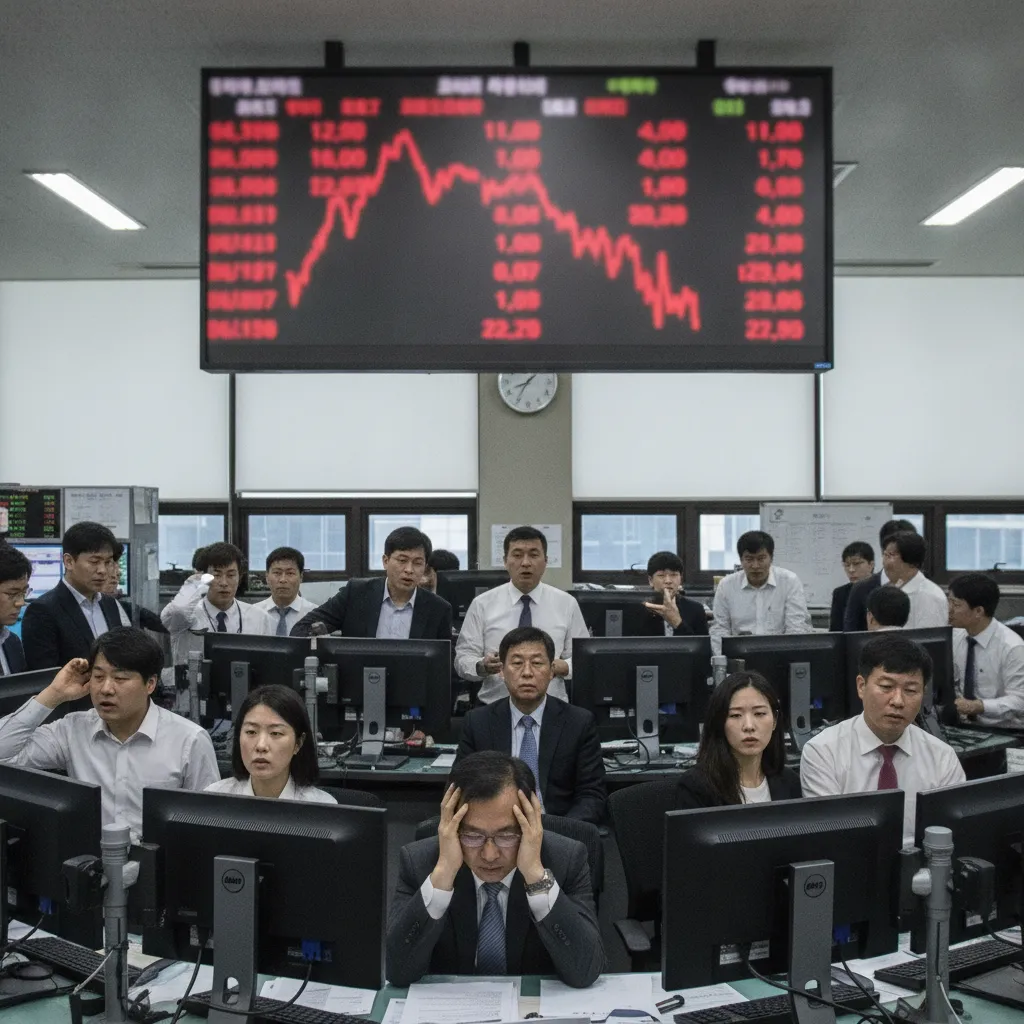



South Korea’s stock market is facing a brutal wake up call after a period of dizzying growth fueled by the artificial intelligence gold rush. The benchmark Kospi index recently plummeted eight percent in a single session, forcing a trading halt as heavyweights like Samsung Electronics and SK Hynix saw double digit losses. This sudden collapse marks a dramatic shift for a market that spent the first half of 2026 as one of the strongest performers globally, proving just how volatile the appetite for AI related assets has become.
The turmoil stems from two distinct pressures hitting the sector simultaneously. First, stubborn inflation data from the United States has reignited fears that high interest rates will persist longer than hoped, making it far more expensive for companies to fund the massive infrastructure needed for AI. Beyond these macroeconomic headwinds, however, lies a deeper existential crisis regarding valuation. Investors are starting to wonder if the astronomical spending on semiconductors will actually translate into sustainable profits or if the industry is simply riding a speculative bubble.
This skepticism is causing traders to stop viewing chipmakers as high growth tech stars and instead treat them as cyclical commodity plays subject to boom and bust cycles. Even when companies report stellar earnings forecasts, shareholders remain uneasy. There is mounting anxiety that increased competition from Chinese rivals like CXMT could flood the market with server memory products, potentially crashing prices just as demand begins to plateau.
Adding to the instability is a mass exodus of capital, with foreign investors dumping trillions of won in South Korean equities throughout October. With corporate buyback programs from Samsung and SK Hynix winding down, there are fewer safety nets left to catch the falling indices. While some analysts suggest we are merely seeing a temporary dip before a wider recovery, others see this rout as proof that the initial euphoria surrounding AI has finally met reality.