


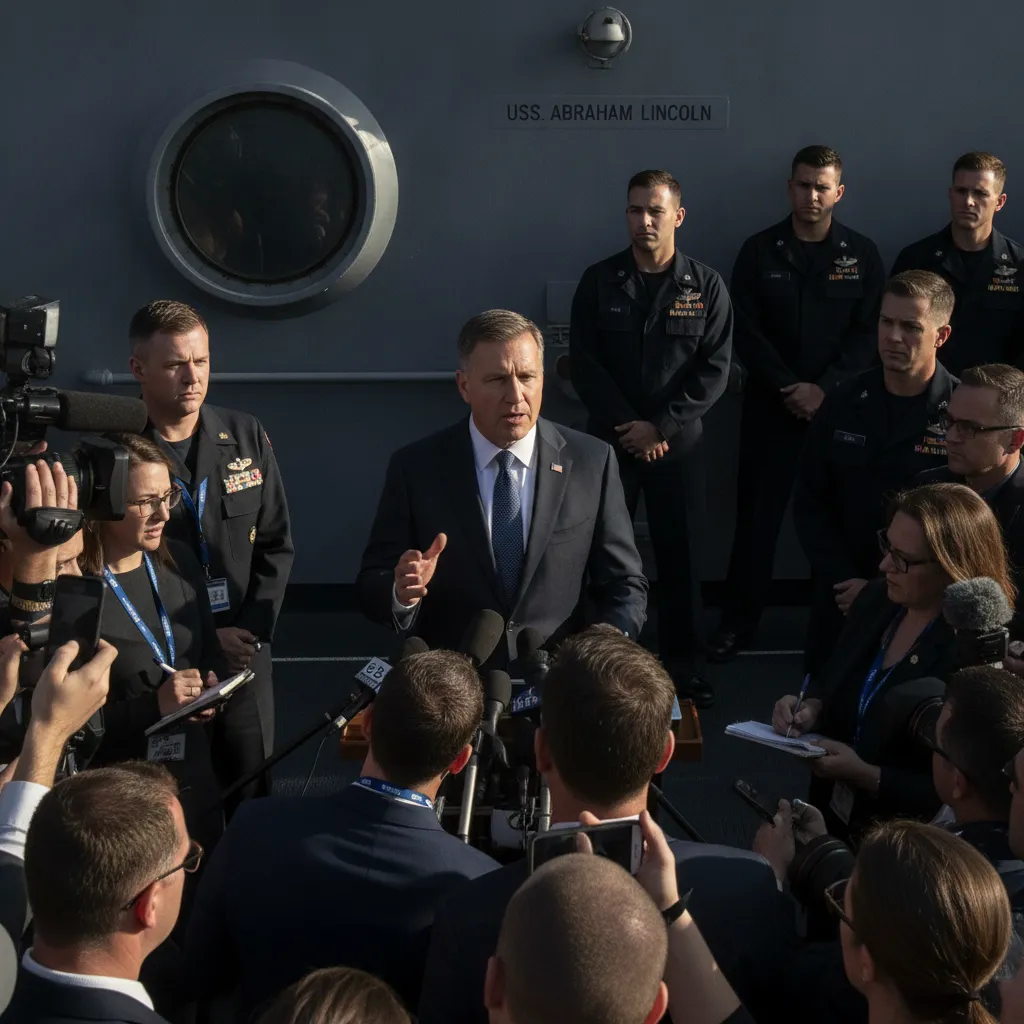

Defense Secretary Pete Hegseth has sparked a firestorm of bipartisan criticism following his confirmation that the firing squad execution of Nidal Hasan, the Fort Hood mass shooter, will be livestreamed. Speaking during an interview aboard the USS Abraham Lincoln, Hegseth argued that making the event public ensures citizens understand the grave consequences of such crimes. This proposal marks a radical departure from American tradition; the last widely recognized public execution occurred nearly ninety years ago in 1936. If it proceeds, it would represent the U.S. Army’s first firing squad execution since World War II and its first death penalty imposition on a service member in over six decades.
The plan has drawn sharp rebukes from across the political spectrum, with several Republicans comparing the move to tactics used by authoritarian regimes. Senator Thom Tillis and Representative Austin Scott both voiced their disapproval, suggesting that broadcasting executions is characteristic of oppressive dictatorships or extremist groups rather than a modern democracy. Even within the administration, there appears to be hesitation. Vice President JD Vance expressed doubt that the livestream would actually materialize and stated clearly that he would not watch it himself, while President Donald Trump noted that a final determination regarding the broadcast is still pending.
Legal experts and human rights advocates warn that turning an execution into a public spectacle could have damaging societal effects. Sheri Lynn Johnson of Cornell Law School suggested that such a display celebrates violence in a way that strips away human dignity and potentially desensitizes the general public to killing. While firing squads are occasionally used as alternatives to lethal injections due to drug shortages and botched procedures, their overt brutality usually keeps them behind closed doors. Critics argue that moving toward transparency in this instance crosses a line into creating bloody spectacles reminiscent of those seen today in North Korea or Iran.
Logistical questions remain unanswered as the Pentagon prepares for December 3, when soldiers are slated to carry out the sentence at Fort Hood. Questions regarding how the shooters will be selected and who will manage the technical aspects of the stream have yet to be fully addressed by defense officials. While FCC Chair Brendan Carr indicated it is unlikely broadcast television networks would air the footage, he deferred final authority to Hegseth’s decision on how to proceed with the distribution of the video.