







Shopping malls aren’t as empty as many Americans think, despite the widespread belief that online shopping has kept people at home.
Americans are still heading to the mall, according to the Placer.ai May 2026 Mall Index.
Foot traffic was up 2.7% year over year at indoor malls last month, 5.5% at open-air shopping centers, and 2% at outlet malls. So far in 2026, March was the only month in which foot traffic contracted.
The problem is that there are far fewer malls for American shoppers to visit.
American malls have been beset by challenges over the last decade, from the collapse of big-box stores such as Sears and JCPenney to online shopping habits created by the pandemic. As of June 2025, there are fewer than 1,000 malls remaining in the United States, down from 1,200 in 2015, according to the New York Times.
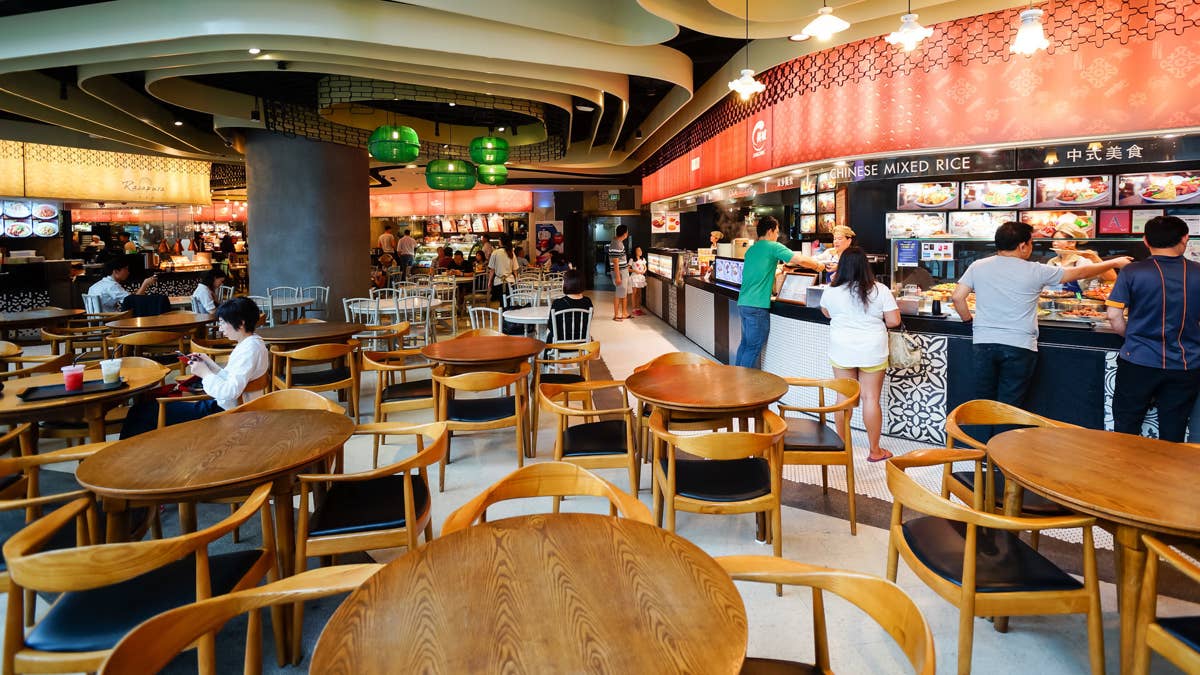
Fewer malls mean fewer mall food courts, and that has been news for a longtime staple of that section of the shopping center, Steak Escape.
Steak Escape has dwindled
Steak Escape was one of the first sandwich chains to prepare all its food in front of customers. It’s a sandwich shop that specializes in the steak and cheese sandwich, which, in the company’s 1980s heyday, was more of a regional favorite in Pennsylvania and the Northeast than a nationally known item.
As a teenager growing up outside of Boston, we had sandwich shops, roast beef places, and pizza restaurants selling steak and cheese sandwiches in pretty much every town, so Steak Escape wasn’t a chain I knew.
In parts of the country, however, the chain introduced the popular sandwich into new markets.
Bill Church, executive director of Food Service and Retail Development for MZD Advertising, was part of a 2010 attempt to revive the brand. At the time, the chain still had locations in 24 states and three countries, according to QSR Magazine.
“Steak Escape has an absolutely dynamic menu featuring Philly Cheesesteak sandwiches, a great steakburger, killer salads, fresh-cut fries, and a great baked potato,” Church told QSR. “If serving great food keeps people coming back, this is the answer. They have affordable prices and a great experience.”
Those efforts ultimately failed to reverse the chain’s long decline. It currently operates 20 restaurants across six states, according to the store locator page on its website.
Steak Escape quick facts:
- Steak Escape was founded in 1982 in Columbus, Ohio, where founders Ken Smith and Mark Turner opened a 209-square-foot restaurant that became the top-selling eatery in its market, according to its website.
- At its peak, Steak Escape operated more than 140 locations nationwide, with additional restaurants in countries including Mexico and Bahrain, reported QSR Magazine.
- By 2000, the chain had about 150 franchised restaurants across the world and was pursuing aggressive domestic and international expansion through multi-unit franchise agreements, added QSR Magazine.
- As shopping mall traffic declined, Steak Escape shifted away from its traditional food court model, opening standalone and strip-center restaurants while rebranding the concept, according to Nation’s Restaurant News.
- The company later introduced new fast-casual prototypes with expanded menus and drive-thrus as it worked to reinvent the brand beyond its mall roots, reported QSR Magazine.
Steak Escape once had nearly 300 restaurants
When you add company-owned restaurants to the chain’s franchised locations, it nearly hit 300 locations in 2000, but has been in slow decline since then. Part of that happened because despite multiple efforts to move away from malls, the chain never quite figured out how to successfully grow outside the food court.
In 2015, the chain had 51 remaining locations, only 19 of them in malls, and it rolled out a new “Express” version of its restaurant, according to NRN.
More Restaurants:
- 74-year-old fast food giant closes 207 U.S. restaurants
- Iconic burger chain closes 89-year-old restaurant for good
- 86-year-old nationwide ice cream chain closes 46 stores
“In urban markets, people are at work, they have a limited time,” said Reginald Morris, the franchisee of the express unit, who is spearheading the effort. “They have one hour. They have a lot of food choices. They don’t want to spend five to 10 minutes in line.”
The Express rollout followed a broader 2011 rebranding that expanded the menu, introduced healthier options, and renamed the concept Steak Escape Sandwich Grill.
Neither initiative reversed the brand’s long-term decline.
Shutterstock
Leaving the mall behind is hard
Steak Escape is not alone in failing to transition from the mall food court to traditional restaurants. A number of other chains followed the same path, according to Parade, a sister publication of TheStreet.
Some examples include:
- Hot Sam Pretzels: Once the dominant mall pretzel chain with more than 1,000 locations before being acquired by Mrs. Fields, the brand disappeared as stores were converted or closed.
- Orange Julius (traditional mall locations): While the brand still exists inside some Dairy Queen restaurants, most stand-alone mall Orange Julius locations have disappeared.
- Arthur Treacher’s Fish & Chips: Once a common mall food court tenant with more than 800 restaurants, the chain only has a handful of locations remaining.
- Great Steak & Potato Co.: Formerly one of the country’s largest mall cheesesteak chains, the brand has shrunk dramatically from its peak.
- Ranch*1: The popular mall food court chicken sandwich fast-food chain has nearly disappeared after years of closures.
- Boardwalk Fries: Once common in malls during the 1980s and 1990s, it now operates only a small number of locations.
It’s fairly rare for a mall-based chain to make the transition successfully, but it’s not unheard of. Panda Express has transitioned from a food court chain to significant growth with stand-alone restaurants.
The chain has 2,374 units domestically, making it by far the largest Asian concept in the U.S. And it’s still run by the same couple that founded the brand in 1983, Andrew and Peggy Cherng, according to Restaurant Business.
Panda Express began in a mall as a variation of the lunch menu at the full-service concept Panda Inn, a restaurant Andrew Cherng and his father Ming-Tsai Cherng first opened in 1973 in Pasadena, Calif. Panda Inn continues to operate under Panda Restaurant Group.
Around 1997, the chain opened its first stand-alone location.
“One of the things we learned about being in malls was that leases were shorter term, and we didn’t necessarily control our own destiny,” CFO David Landsberg told Restaurant Business. “When we moved to the street, we could depend on ourselves to stimulate demand, not depend on the malls.”
Now, only about 170 locations are in malls, and less than 10% of sales are attributed to those restaurants.
That’s a transition Steak Escape never fully made, leaving the chain as a small reminder of its past glory.
Related: Kroger supermarkets add exclusive Coca-Cola soda flavor